
Understanding Amine Blush: What Is It and Why It Matters in Epoxy Marine Coatings
When working with marine epoxy systems, one of the most common and problematic surface issues is amine blush. This invisible or waxy surface film may appear after curing, and, if not handled correctly, can seriously undermine the performance, adhesion, and longevity of your protective coatings or repairs. Whether you’re applying new topcoats, bonding hardware, or prepping for a beautiful gloss finish, recognizing amine blush and properly addressing it is essential for long-lasting results.
This detailed guide will explain what causes amine blush in marine epoxy, why humidity and environment matter, how to identify and safely remove it, and how to prevent its occurrence through proper surface prep and best-in-class material selection. By the end, you’ll be confident in delivering professional, trouble-free epoxy jobs on every boatbuilding or repair project.
The Chemistry of Amine Blush in Epoxy Coatings
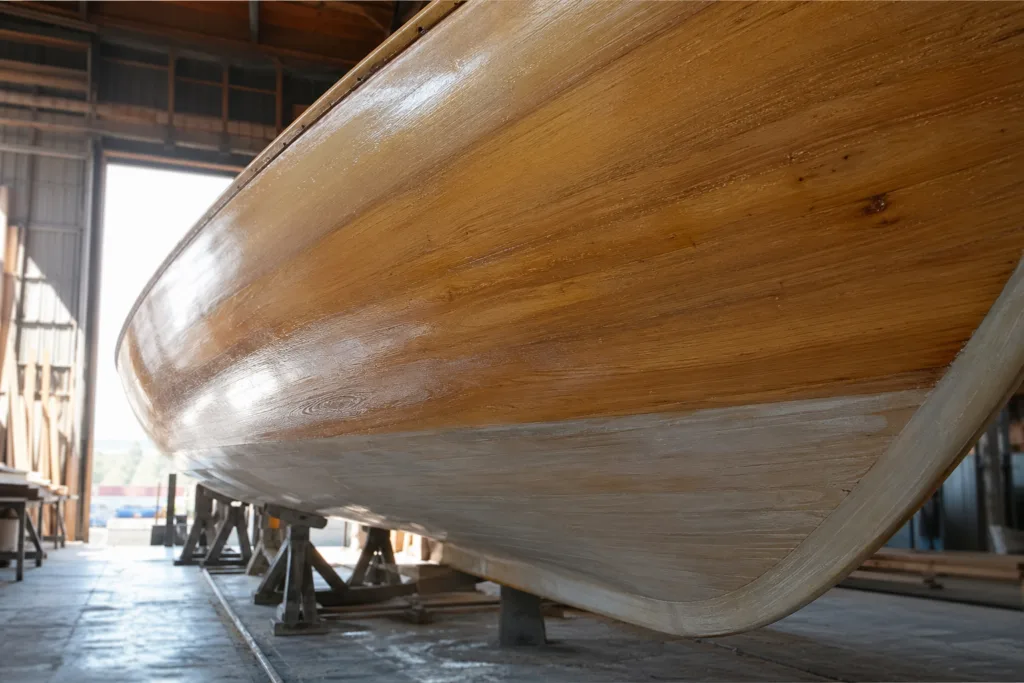
Amine blush results from a reaction between the amine hardener (part B) in epoxy resin systems and carbon dioxide and moisture (water vapor) present in the surrounding environment. This surface phenomenon is particularly common with amine-cured marine epoxies, especially during humid or damp conditions often encountered in shipyards, boatyards, and marine repair shops.
Amine Blush Epoxy; Humidity, Washing, Sanding, Recoat Window, Coating Adhesion, Surface Prep: Full Breakdown
When you search for amine blush epoxy; humidity, washing, sanding, recoat window, coating adhesion, surface prep, you’re likely seeking reliable methods to recognize, prevent, and remedy amine blush for optimal epoxy performance. Let’s break down these critical factors:
- Humidity accelerates blush formation and increases risk
- Washing is the only reliable removal method
- Sanding blush without washing worsens contamination
- Recoat window depends on surface condition and cleanliness
- Coating adhesion fails without proper prep and blush removal
- Surface prep habits determine success or failure
What Causes Amine Blush? Environmental Conditions and Material Factors
Amine blush usually develops when uncured or just-cured epoxy is exposed to cool air, high humidity, or fluctuating temperatures—common conditions in marine settings. Technically, the amines in the hardener react with CO₂ and water vapor, forming a film of amine carbamate or carbonate at the surface. This layer can be invisible, greasy, or slightly sticky. Even advanced solvent-free primers (such as marine epoxy resins) can be susceptible, though the right resin chemistry can reduce risk.
Signs and Symptoms: How to Identify Amine Blush Before Recoating
Before you recoat, bond, or sand epoxy, it’s crucial to spot amine blush. Look for:
- A greasy, waxy, or slightly oily feel (often only under warm water)
- Matte or uneven gloss sheen on cured surfaces
- Difficulty wetting out the surface with water or solvent
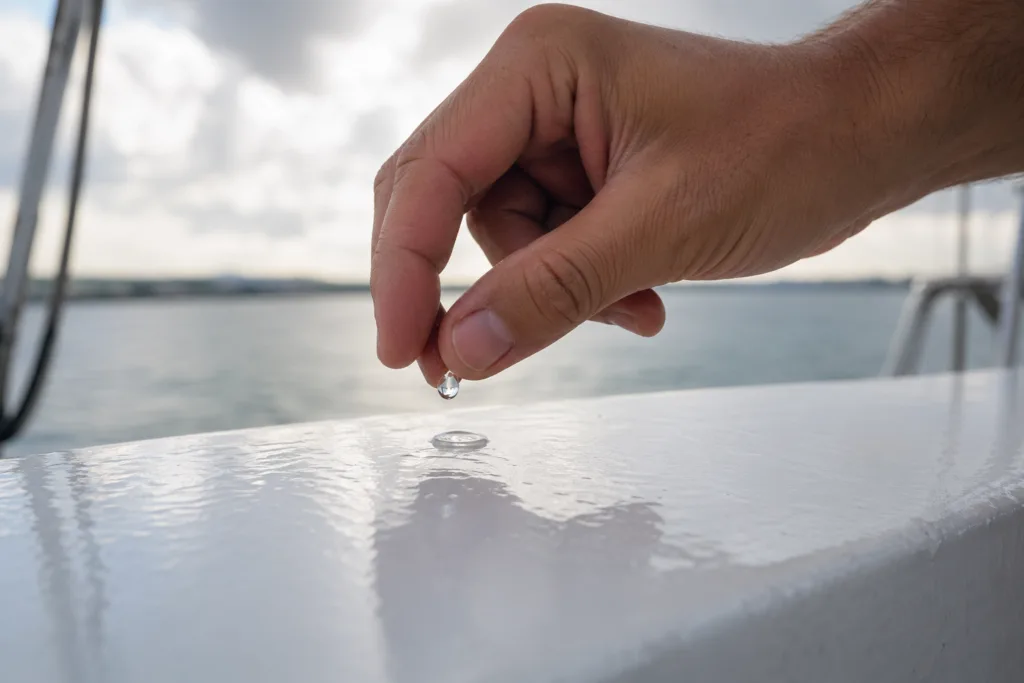
- Test: Dab the surface with water—the blush dissolves, whereas cured epoxy does not
Surface appearance is not always reliable—some blush films are nearly invisible. Always err on the side of caution and test if any doubt exists.
Critical Importance of Humidity: Why Marine Epoxy Is So Sensitive
Humidity, especially in enclosed spaces or by the water, triggers blush production. When relative humidity exceeds 65%, risk increases. At dew point (when substrate is cooler than air), condensation worsens the problem. Marine installers and boatyards must consider not only air temperature but substrate temperature, air movement, and direct sunlight, as these factors combine to drive condensation and humidity at the surface during epoxy curing.
Recoat Window: Timing Matters
Following the recoat window is crucial, but the clock doesn’t start from “hours after mix”—it begins with the achieved surface temperature and curing conditions. Blush is more likely if recoating is delayed in humid environments. Always clean and prep the surface, even within the technical recoat window, unless the data sheet specifically guarantees blush-free curing.
Resin Selection: Different Epoxies, Different Blush Risks
Innovative amine hardener chemistries can minimize or delay blush formation. Marine-specialized resins, such as those engineered for low emission and high moisture environments, are less likely to blush. Products from manufacturers focused on research and development select hardener systems balancing reactivity, flexibility, and anti-blush properties. For example, ZDS-2060AB is specifically formulated for wood and marine applications, offering reduced blush risk and high bond strength on challenging substrates.
What Really Happens If You Overlook Amine Blush?
Failing to remove blush before sanding, recoating, or painting can trigger catastrophic failures:
- Poor coating adhesion—peeling, blistering, or delamination of subsequent layers
- Patchy gloss/appearance—especially with clear topcoats or varnishes
- Contaminated bondlines—hardware or fiberglass delaminates
- Trapped moisture—leading to intercoat bubbling over time
It’s not “just a cosmetic defect”—amine blush compromises the water and chemical resistance of your whole coating system.
How to Safely Remove Amine Blush: Step-By-Step Guide
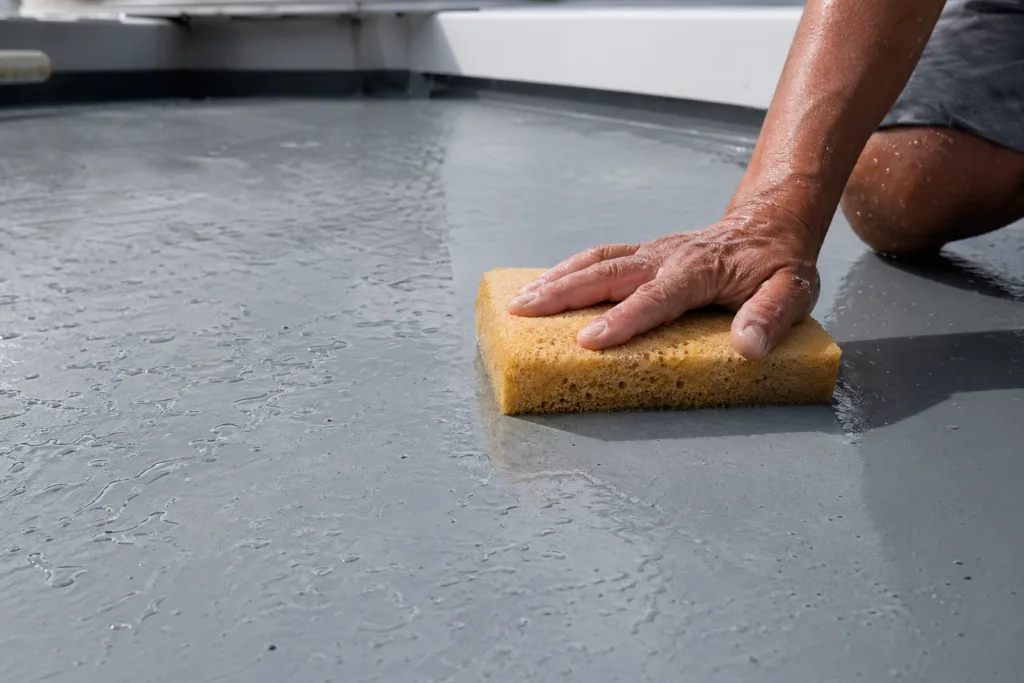
The only proven way to remove amine blush is a thorough water wash before any sanding or abrasion. Never sand or scuff the surface first, or you’ll grind the sticky film into the pores. Here’s a professional workflow supported by resin manufacturers worldwide:
- Wet the surface with warm (not hot) water using a sponge, lint-free cloth, or 3M abrasive pad
- Add a little mild soap if needed (no ammonia or harsh chemicals)
- Scrub in circles, frequently rinsing your pad or cloth
- Rinse thoroughly with clean water—repeat if water beads or feels oily
- Allow to fully dry before sanding, abrading, or recoating
NOTE: Solvents (acetone, alcohol, MEK) do not reliably remove amine blush—the film can smear, become more tenacious, or dissolve into the surface.
When to Sand and How to Prep After Washing
After the washed surface is dry, test for blush (water bead) one more time. Only then begin sanding or mechanical prep using the recommended grit—typically 80- or 120-grit is perfect for intercoat adhesion in marine repair scenarios. For best results, vacuum dust (no compressed air) and tack-rag before applying new epoxy or coatings.
Special Case: Filling Gaps and Repairs with Blush-Prone Epoxy Systems
When you use high-build fillers or repair putties—such as ZDS-1240—surface blush may remain on “lazy” or horizontal areas. Wash the putty surface as above before sanding flush. This preserves optimal mechanical lock for the next resin layer, especially important on marine plywood, decks, and non-skid finishes.
Alternate Problem: Tacky Surfaces After Curing—Is It All Amine Blush?
Not all tacky, sticky, or under-cured surfaces are caused by amine blush. Mixing errors, low-temperature curing, or poor base-to-hardener ratios can also cause persistent tackiness. Learn from this by always following precise troubleshooting tips for tacky epoxy and confirming your batch procedures are up to standard.
Surface Energy and Coating Adhesion—Why Blush Prevention Is Critical
Epoxy relies on a super-clean, high-surface energy substrate to make strong chemical and mechanical bonds. Amine blush acts as a barrier, reducing available functional groups and preventing proper wetting or covalent linkages between layers. If you skip washing, you may “lock in” failure modes that only reveal themselves under wetting, weather, or flexural stress.
Testing for Cleanliness—Simple Ways to Check Your Work
Pro installers often perform a “water droplet” test (water beads on blush, rolls off clean epoxy) and a surface-wetting test (applying a little neat resin to a test spot) to ensure surfaces are 100% clean before sanding, priming, or repainting. A quick test now prevents field callbacks and rework later.
Blush Myths and Misunderstandings: Separating Fact from Fiction
A few common but mistaken ideas about amine blush include:
- Sanding alone is “good enough” prep (it’s not!)
- Blush only appears in cold weather (it actually occurs anytime humidity is high—even in warm climates)
- Solvent wipes work for blush removal (only water dissolves the amine film safely)
- Premium epoxies don’t blush (even top systems can—though some are more resistant)
Preventing Amine Blush: Best Practices for Application and Environmental Control
You can dramatically limit blush risk by controlling site conditions:
- Work when humidity is lowest (warm, stable part of day)
- Heat or dehumidify the substrate and workspace—never coat cold surfaces
- Avoid dawn/evening when dew can form
- Use slow-cure or blush-resistant resin systems in challenging conditions
- Always wash cured surfaces before sanding or recoating
Case Study: Optimizing Marine Epoxy Primers Against Blush
At ZDSpoxy, marine R&D teams simulate high-humidity and rapid temperature changes to develop solutions that increase user margin for error. For example, evaluating batch consistency, gel times, and surface wettability across pilot application panels helps select hardener/resin pairings less prone to blush, even on substrates that pass through the dew point overnight.
Professional Tricks: Creating a Layered, Blush-Free Build
- Apply thin, well-brushed primer coats first—brush and “tip off” for even layer
- Time recoats for just-tack-free, but always water-wash between sessions
- Plan for overnight cures when possible, but wash at the start of the next shift
- Flag overnight or rain-exposed areas for special cleaning attention before resuming coating
Troubleshooting: What to Do If You Forgot to Wash
If you realize you sanded before washing, immediately scrub with water, let dry, and lightly degloss again with new sandpaper. Don’t count on topcoats or “high-solids” primers to mask the issue—rework now is much easier than repairing adhesion failures later.
Frequently Overlooked Areas at Highest Risk of Blush
- Horizontal surfaces (decks, sole plates, tabbing areas)
- Plywood cutouts and low spots
- All chemical and secondary bonds (fiberglass overlays, fillets, adhesive joins)
- Any spot with slow air flow or low light
Safety and Handling Considerations
Always wear gloves during surface washing, as amine blush can be mildly skin-irritating for some users. Dispose of soapy water safely, and remember that resin-rich surfaces may be slippery during the water washing process. Ensure good ventilation, as one component of good surface prep is minimizing repeat exposure to VOCs and aerosols during sanding or cleaning.
Field Notes: Why Industry Professionals Make Blush Removal a Habit
Consistent washing and surface prep protocols are universally respected by marine yard supervisors, inspectors, and resin chemists alike. Successful crews know to confirm cure, wash surfaces, check for blush, and get the base right—this discipline not only minimizes cost and rework but upholds safety and long-term vessel reliability. As explained in technical reviews like Reducing Yellowing and Optimizing Gloss, process control at the prep stage is the main defense against any coating defect, including blush.
Summary Table: Amine Blush Impact and Prevention at a Glance
| Factor | Blush Risk | Prevention Step |
|---|---|---|
| High humidity / condensation | Very High | Site dehumidification, schedule work |
| Waiting past recoat window | High | Wash, test, and re-prep surface |
| Incorrect removal method | Certain Failure | Water wash, not solvent or sanding |
| Poor resin choice for setting | Increased | Select marine or blush-resistant epoxy |
Best Practice Checklist: Amine Blush Epoxy; Humidity, Washing, Sanding, Recoat Window, Coating Adhesion, Surface Prep
- Plan for surface washing after every epoxy cure cycle
- Never sand before water wash
- Test surfaces—never assume
- Choose the right resin for marine conditions
- Control humidity and temperature on-site
Conclusion: Long-Term Success with Amine Blush in Marine Epoxy
Avoiding failures with marine epoxy coatings means understanding, identifying, and eliminating amine blush before recoating or finishing. Always combine disciplined preparation, suitable resin selection, and close attention to humidity and curing conditions. When in doubt, water wash and repeat. These industry-backed principles will reward you with stronger adhesion, fewer callbacks, and a finish that performs under real marine service.
Frequently Asked Questions
Is amine blush harmful if left on the epoxy surface?
Yes. Amine blush acts as a contaminant, preventing good adhesion of subsequent coatings, adhesives, or finishes. It can lead to poor durability, delamination, and aesthetic flaws over time.
Can I remove amine blush with solvent instead of water?
No. Solvents like acetone or alcohol do not reliably remove the blush and may smear it, making matters worse. Only water (preferably warm) will fully dissolve and remove the amine blush layer.
Do all epoxy resins produce amine blush?
Most marine-grade amine-cured epoxies will form blush to some extent if exposed to moisture during curing. However, some modern blush-resistant formulations limit or nearly eliminate the risk under controlled conditions.
How soon after curing should I remove amine blush?
Wash off amine blush as soon as the epoxy is fully cured and cool to the touch. Delaying can make cleaning more difficult, especially if the surface has been exposed to dust, sunlight, or rain.
What if I sanded blush without washing first?
If you sanded before washing, you may have worked the blush deeper into the surface. Wash thoroughly, let the surface dry, and sand lightly with fresh abrasive before proceeding.
Is it necessary to rewash between every coat if using a blush-resistant epoxy?
If the technical data sheet verifies “blush-free” curing under your exact site humidity, you may skip the wash—otherwise, always wash and check. When in doubt, play it safe and water wash.
Related Reading
- Diagnosing & Fixing Tacky Marine Epoxy: Actionable Solutions
- The Definitive Guide to Epoxy Cure Time & Safe Recoating
- Ultimate Marine Deck Coating Workflow: Epoxy and Topcoats
- Smart Exotherm Control for Safe, Thick Marine Epoxy Pours
- Pro’s Guide: How to Epoxy Seal Marine Plywood for Maximum Durability