
What Is a Marine Deck Coating System?
Marine deck coating systems are engineered protective finishes designed to handle the relentless challenges of sea life—UV exposure, salt spray, impact loads, and demand for sure-footedness in wet conditions. The best-performing solutions combine an epoxy primer for optimal adhesion and barrier protection, followed by a polyurethane or polyaspartic topcoat for flexibility, wear resistance, and weatherproofing. Integrating non-skid additives ensures traction, and modern systems feature low VOCs for safety and compliance. This article gives a practical, step-by-step look at these systems, focusing on real-world performance from the shipyard to offshore platforms and everything in between.
Why Layered Deck Coating Systems Matter for Marine Use
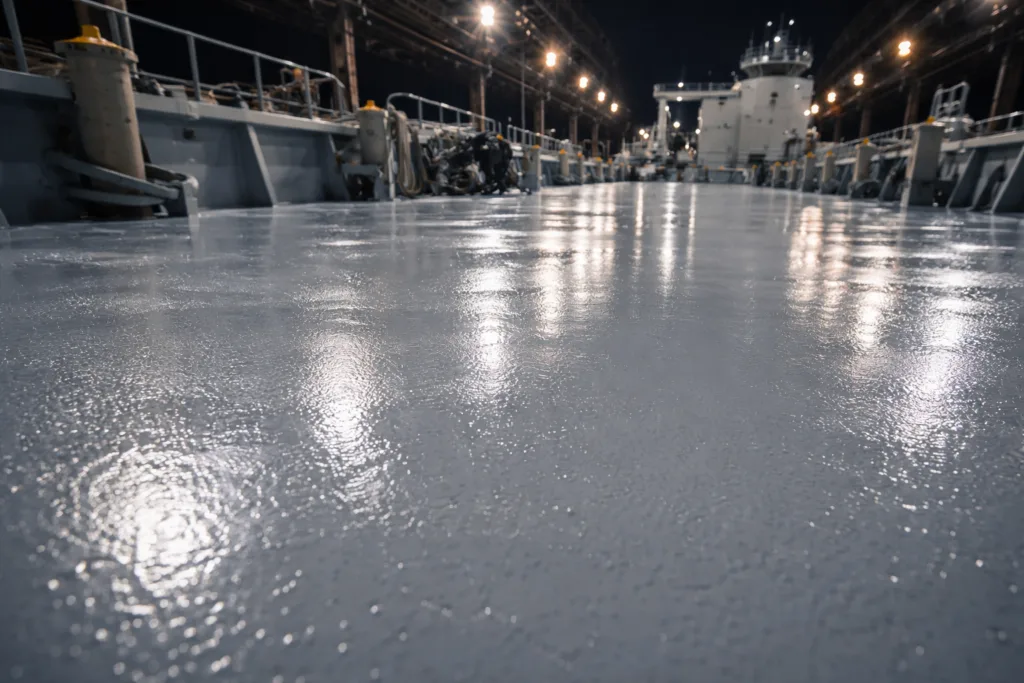
Single-layer solutions rarely last on the water. True marine deck coating systems use a multi-layer approach, leveraging the distinct strengths of epoxy for the base and polyurethane or polyaspartic for the topcoat. This provides waterproofing, excellent adhesion, and superb durability even against heavy foot traffic or gear movement. Skipping a layer or mismatching chemistries can lead to peeling, hot tire pick-up, or dangerous slipperiness after just a season at sea.
System Components: Epoxy Primer, Polyurethane Topcoat, and Polyaspartic Finishes
Most marine deck coating projects start with an epoxy primer. High-solids, solvent-free grades maximize bond strength to steel, aluminum, or marine plywood decks, locking out moisture and prepping the surface for subsequent coats. Next, a polyurethane topcoat brings flexibility and strong resistance against UV rays and chemicals. In fast-turnaround applications, polyaspartic topcoats offer rapid return to service and extended recoat windows—ideal when docks or workboats can’t afford downtime. The combination is customizable for boats, ferries, offshore platforms, or marina decks.
Choosing the Right Epoxy Primer for Marine Decks
When selecting an epoxy primer, durability and adhesion are paramount. Low-odor, solvent-free options like ZDS-2060AB are especially popular for marine applications due to their environmental compliance and robust penetration. For decks subject to moisture, a high-build variant may be recommended to reduce pinholing and future blistering. Factory pre-mixed or two-component systems with clear mix ratios support site consistency.
Application Methodology: Surface Prep to Final Topcoat
Successful deck coating starts with disciplined surface preparation. This includes grit blasting, grinding, or at minimum, aggressive sanding to expose clean metal or sound wood. Remove oil contamination, laitance, and salt deposits—often underestimated threats in a marine environment. After priming, observe the manufacturer’s specified recoat window to ensure intercoat adhesion. Polyurethane or polyaspartic topcoats are then roller or spray-applied, with attention given to avoiding puddling in deck camber and around hatch perimeters. ZDSpoxy engineers emphasize consistent batch sizes and mechanical mixing for even cure, especially on large decks.
Integrating Non-Skid Additives: Slip Resistance Tactics
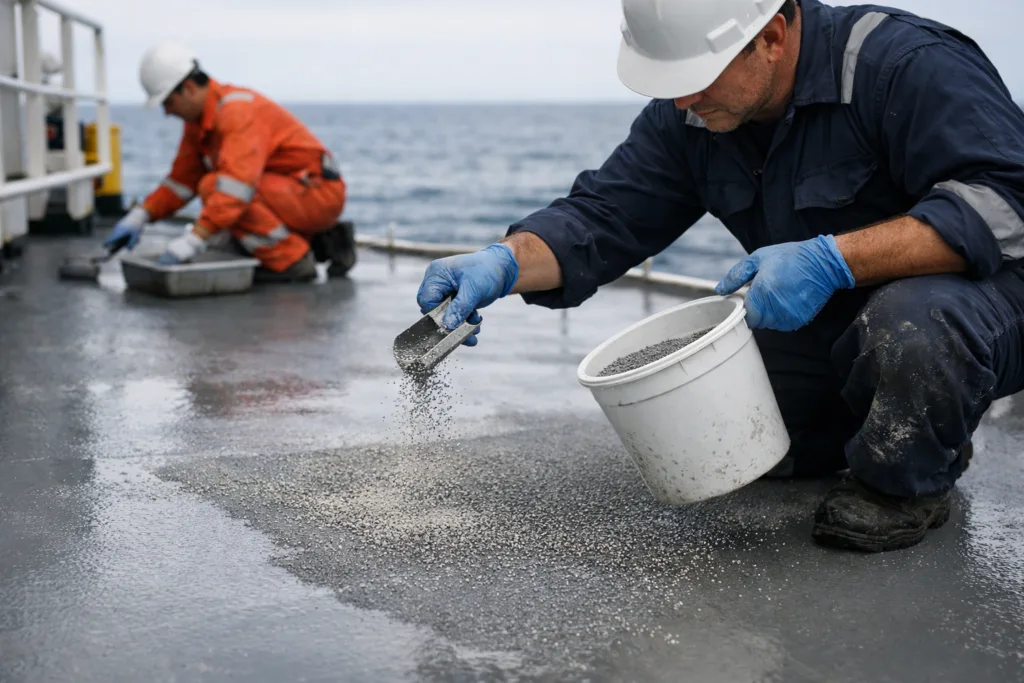
Safety underfoot is critical. Non-skid additives, often broadcast onto wet primer or base coat, provide slip protection in both wet and dry states. Choices include aluminum oxide, silica sand, or rubber granules for added softness. The grid size and coverage rate are tuned to match walking/working requirements: finer grains for passenger areas, coarser for working decks. Systems like anti-slip waterproof coating for wet areas walk through proven strategies for balancing slip protection with easy-to-clean deck surfaces.
Polyurethane vs Polyaspartic Topcoats for Marine Decking
Polyurethane topcoats are field-proven for their gloss retention, chemical resistance, and UV stability. Polyaspartics, a newer generation, cure more quickly and tolerate broad temperature/humidity swings, reducing dockside downtime. Both offer flexibility to absorb deck movement without cracking. For installations requiring the fastest turnaround (like ferry docks or naval platforms), polyaspartic options are increasingly favored, but strict compliance with working time and recoat intervals is essential to avoid defects.
Comparing Abrasion Resistance: Real-World Testing
Deck coatings must withstand more than just pedestrian traffic; dropped tools, sliding crates, and anchor chain scuffs are routine. Abrasion resistance is commonly measured with methods like Taber testing, revealing real numbers for wear cycles. To understand how topcoats hold up, see Taber abrasion testing for polyurethane topcoats, which demonstrates considerable differences in product claims versus site reality. Quantitative results inform maintenance cycles and long-term ROI for ship owners.
Ensuring Low VOC and Compliance for Marine Coatings
Regulatory pressure and crew health drive the adoption of low-VOC formulations. Modern marine deck systems use raw material upgrades to cut solvent content, keep application odors minimal, and comply with global emissions standards. Choosing low-VOC solutions improves life onboard while accelerating safety inspections. Always refer to product datasheets to confirm VOC grams per liter, cure profile, and storage limitations in hot/cool climates.
Recoat Windows: Timing Matters
Missing the correct recoat window can undermine the system. Epoxy coats need a specific minimum and maximum interval before topcoat application for the bond to develop, usually measured in hours, depending on temperature and humidity. Polyaspartics often have tighter working windows due to their rapid cure speed. For planned deck maintenance, factor in ambient weather, available manpower, and nighttime dew risks into the recoat window plan—missing it can require sanding or even a full re-prime.
Managing Marine Service Downtime with Fast-Cure Coatings
Downtime equals lost revenue or delayed schedules offshore or in busy facilities. That’s why polyaspartic coatings, with cure times as fast as 1-2 hours to walk-on or recoat, have changed the equation. Even conventional polyurethane can be accelerated with proper hardener selection. ZDSpoxy field teams have seen that controlling temperature and humidity during application can further shrink service downtime—even with larger jobs like ferry decks or ship fender decks—using heat mats or controlled drying.
How Coating System Design Adapts to Substrate Type
Marine decks vary: steel, aluminum, marine plywood, and composites all have different expansion rates, porosity, and surface profiles. The epoxy primer layer can be tailored for wet tolerance on wooden decks (to prevent rot) or rust conversion on metals. On mixed substrates, engineers may call for a two- or three-layer build to even out performance. Product selection should always consider deck movement, prior coatings, and desired longevity.
Pinhole and Bubble Prevention in Deck Coatings
Poor pinhole control during primer or topcoat application can permit blistering from moisture vapor or cargo washing—delamination often starts small. Effective troubleshooting includes staged application, low-foam mixing, and even temperature acclimatization of batches. For deeper guidance into coating bubble issues and prevention, see our in-depth coverage on epoxy coating bubble prevention.
Color and Finish Choices: Sunlight, Safety, and Cleaning
Color is functional. Bright tones aid visibility; gray or tan reduce surface temperature in subtropical ports. High-gloss versus matte depends on glare acceptance and cleaning frequency—gloss can spot dirt but is easier to scrub clean. Choose appropriately pigmented topcoats for UV resistance. For specialty marine projects, opt for custom-matched colors with high-resistance pigments to maximize performance and aesthetics. Consult ZDSpoxy for formulation advice if unsure.
Mixing, Batch Size, and Pot Life: Real Application Habits
Maintaining strict mix ratios and batch size discipline is a cornerstone of reliable performance. Large deck jobs tempt shortcuts, but overloading batches or cutting working time accelerates waste and adhesion risks. ZDSpoxy emphasizes using low-speed mechanical stirrers, weighing out components by the batch, and always pail-mixing before deck application. Even temperature shifts at night or wind exposure can shift cure time drastically.
System Repairs and Recoating: When and How?
Recoating is dictated by visual inspection: look for dull spots, worn non-skid, or early rust blooms. Most systems support spot repairs with compatible touch-up kits (e.g., solventless epoxy patch resin). Sand the area back to sound substrate, wipe clean, then rebuild primer and topcoat layers as per manufacturer’s guidance. Frequent repair keeps decks serviceable without the cost of full removal.
Handling Joints and Seams
Joints between deck plates or at bulkhead transitions introduce stress points and, if left unaddressed, can cause cracking. Solutions include elastic seam sealants or banding with fiberglass, all systems designed for high movement. Special attention goes to deck penetrations for bolted hardware, which benefit from properly detailed epoxy fillets before full system build-out.
Chemical Spills, Oils, and System Resistance
Marine decks face accidental spills—fuels, oils, chemicals—and systems must be resistant. Polyurethane and polyaspartic topcoats often have superior chemical resistance compared to pure epoxy, reducing staining and softening risks. Review chemical resistance charts before final selection, and always clean up spills promptly to extend service life.
Understanding Cure Schedules Onboard and on Dry Dock
Decks coated on moving vessels may require staging or tenting to keep systems clean and dry during curing. Dockside, coatings can be exposed to wind, dust, or sudden rain—knowing the minimum time to rainproof is crucial. Polyaspartic systems benefit projects needing overnight full cure while still allowing multi-hour application windows for error correction. Always coordinate with shipyard supervisors when working around other hot works or trades to reduce contamination risks.
VOC, Odors, and Marine Certification: What Counts?
Low VOC isn’t just about air quality. Certain marine certification schemes mandate specific emissions levels for coatings used on ships or in naval facilities. Review datasheets, request compliance certificates, and plan for adequate ventilation—especially when working below deck or in enclosed superstructure spaces. Some port authorities will inspect for compliance before approving vessel departure or re-berthing.
System Longevity: Calculating Total Cost of Ownership
While upfront cost matters, it’s lifetime performance that impacts a vessel’s bottom line. Well-designed systems with regular maintenance can extend deck life for a decade or more, reducing haul-out cycles and labor costs. Early savings on a low-end product almost always returns as frequent touch-up, downtime, and call-backs. Treating deck coating as a system, not a standalone product, improves outcome and safety.
Common Marine Deck Coating Failures (and Their Prevention)
Failure modes include delamination, rust bleed, pinholes, chalking, or slip loss. Most are traced to poor surface prep, mismatched chemistry, missed recoat windows, or misapplied surface additives. Prevention is a blend of technical knowledge, planning, and honest jobsite inspection. Review our full guide on Marine Epoxy Resin Manufacturer for a deeper dive into system supply best practices for long-term deck performance.
Summary Table: Quick Comparison of Deck System Options
| Layer | Main Options | Key Benefits | Weaknesses | Best Use Case |
|---|---|---|---|---|
| Primer/Base | Epoxy (solvent-free/low VOC) | Strong adhesion, waterproof | Needs topcoat for UV resistance | All marine decks |
| Topcoat | Polyurethane | UV-resistant, flexible, good wear | Cures slower than polyaspartic | High traffic/UV-exposed decks |
| Topcoat | Polyaspartic | Fast cure, superior abrasion, low VOC | Higher cost, quick pot life | Quick turnaround jobs |
| Anti-Slip | Silica, aluminum oxide | Traction, robust to abrasion | May hold dirt, rough texture | Passenger/fishing decks |
Frequently Asked Questions
What makes marine deck coating systems different from standard floor coatings?
Marine deck coatings are engineered for salt exposure, UV, and wet, dynamic surfaces, requiring flexible multi-layer solutions with proven slip resistance. Standard interior floor coatings are not built for these conditions and would fail prematurely.
How do I choose between polyurethane and polyaspartic topcoats for my deck?
Polyurethane offers time-tested durability and flexibility; polyaspartic is ideal for faster turnaround and lower VOC, but needs careful attention during application due to short working life.
Can I apply marine deck coating over an existing, old deck paint?
It depends on the condition and compatibility. Remove unstable layers, sand for anchor profile, and test adhesion. Incompatible coatings may cause peeling, so a primer is usually advised.
Are all non-skid additives safe for bare feet or pets?
Not all; coarser grains like aluminum oxide may be too rough. If using the deck for bare feet or pets, select a fine silica or rubber additive, and test a small area first.
How do I maintain a marine deck coating system for maximum life?
Clean regularly, repair scratches and worn areas quickly, and reapply non-skid as needed. Avoid dragging heavy metal items and review the coating every season for any signs of breakdown.
Do marine deck coating systems require any special safety equipment during installation?
Yes, always use gloves, eye protection, and ventilate the area. Low VOC systems are safer, but all resins/topcoats require PPE and adherence to application datasheets.
Related Reading
- Polyaspartic or Polyurethane? Fast Turnaround Marine Decks Explained
- Epoxy vs Polyurethane Marine Decks: How to Choose the Right System
- Osmosis Barrier Epoxy: 9 Steps for Lasting Marine Hull Defense
- Rot-Proofing Marine Plywood—Epoxy Sealing Truths
- Bonding Deck Hardware with Marine Epoxy: Expert Preparation Tips