
Understanding Gyratory Crusher Spider Bushing Compounds
In heavy-duty mining and aggregate industries, gyratory crushers are the backbone of continuous production. Central to their stability and performance are spider bushing compounds—specialized resins that ensure effective load transfer, wear management, and vibration damping in the spider (the upper part of the mainshaft assembly). This article explores the importance of spider bushing compounds, delving into the material science behind them, their real-world application challenges, and recent technological advancements that boost operational efficiency.
What Are Gyratory Crusher Spider Bushing Compounds?
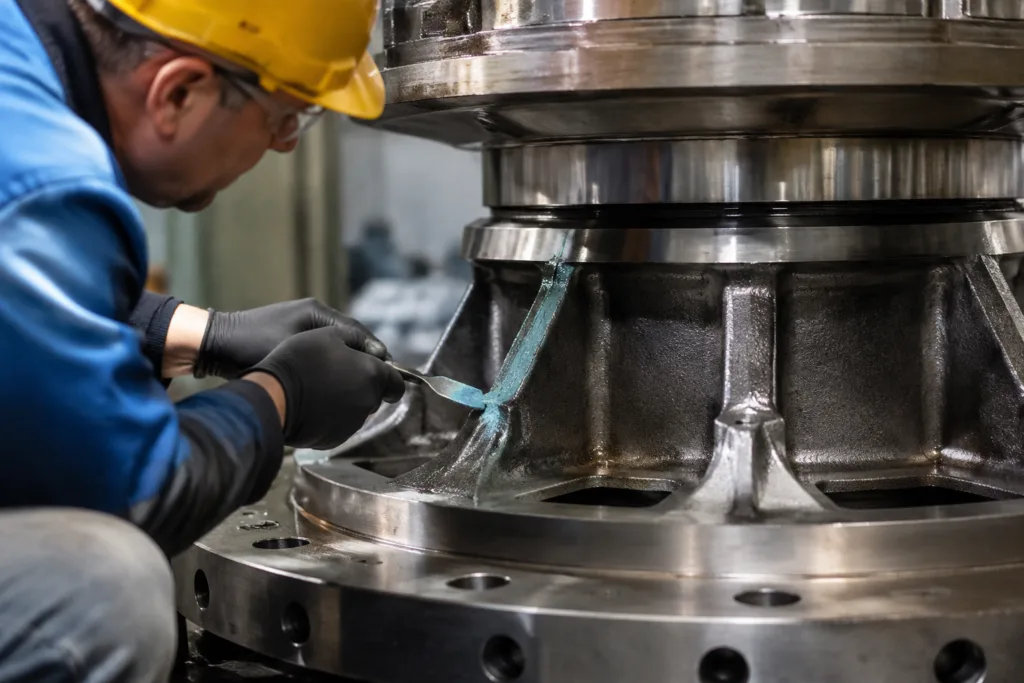
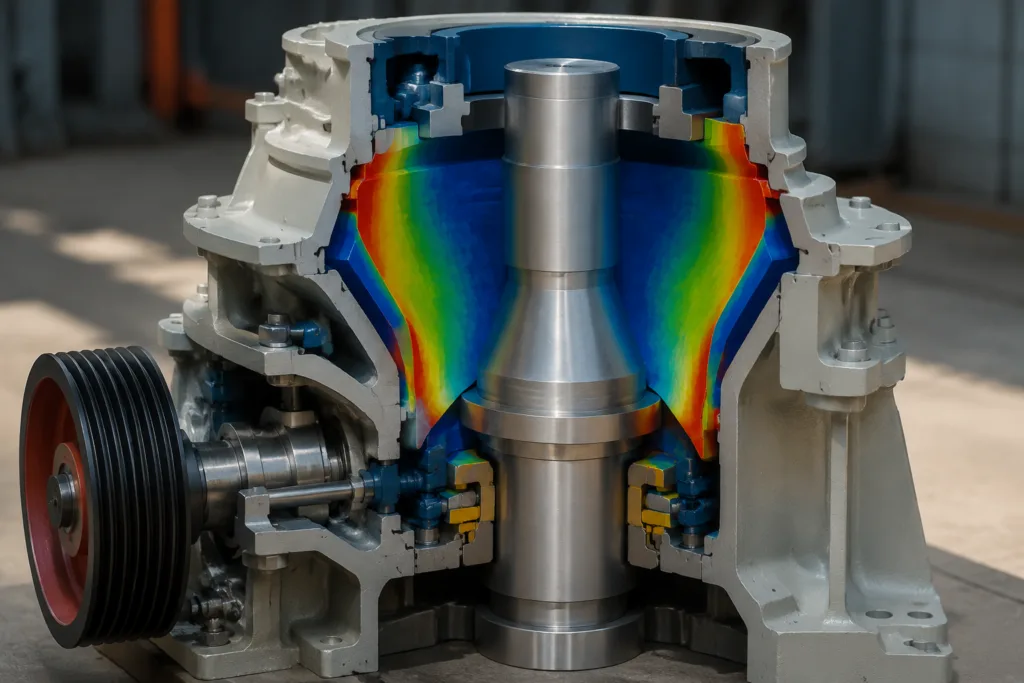
Spider bushing compounds are high-performance, non-shrink resin systems—commonly based on epoxy or polyurethane—designed to fill gaps, bond liners, and manage movement between the spider assembly and shaft in gyratory crushers. These compounds play a key role in absorbing and dissipating the intense mechanical forces generated during crushing operations.
The Critical Role of Spider Bushing Compounds in Gyratory Crushers
Every crushing cycle subjects the spider and mainshaft to thousands of pounds of pressure. Spider bushing compounds act as a buffer, providing:
- Dimensional stability and reinforcement for the spider bushing
- Optimal stress distribution to prevent metal-to-metal contact
- Vibration and impact absorption, reducing micro-movements and subsequent wear
This function is especially vital for crushers experiencing heavy-duty or fluctuating loads, such as those found in primary crushers in mining plants.
Material Properties That Matter: What Makes a Superior Compound?
The ideal spider bushing compound must balance multiple characteristics, including:
- High compressive strength—to withstand enormous static and dynamic loads
- Low shrinkage—for dimensional accuracy and consistent bond line thickness
- Chemical resistance—to fend off process water, lubricants, and ore contaminants
- Thermal stability—important as heat build-up can cause failure
- Controlled exotherm during cure—preventing thermal damage to crusher parts
- Viscosity profile—for proper flow into tight clearances
Innovative resin technologies, like those found in advanced high compressive epoxy grout systems (ZDS-1410AB), exemplify these requirements, ensuring robust performance under harsh operational scenarios.
Performance Impacts: How the Right Compound Enhances Crusher Reliability
Inferior or mismatched compounds lead to inadequate support, liner loosening, rapid wear, and ultimately, unscheduled downtime. When optimal spider bushing compounds are used:
- Load transfer is stable and consistent, maintaining alignment
- Dynamic movement is minimized, reducing wear on internal bushings
- Maintenance intervals are extended
Field data demonstrates that correct compound selection and application can reduce component replacement frequency by up to 30%, leading to significant cost savings over a crusher’s lifespan.
Common Failure Modes and Industry Challenges
Despite their importance, spider bushing compounds fail for reasons such as:
- Poor surface preparation—leading to bond line contamination
- Incorrect mixing or batch sizing causing incomplete cure or air entrapment
- Insufficient chemical or temperature resistance
- Over-filling or under-filling resulting in voids or weak support
These challenges are prevalent in mining sites with high vibration, corrosive process water, or fluctuating ambient temperatures. Real-world ZDSpoxy project teams often see premature spider wear linked not to the bushing itself, but to lapses in compound selection or quality application practices.
Latest Advances in Spider Bushing Compound Technologies
Manufacturers now develop compounds that combine ultra-high flowability with ultra-low shrinkage, using fillers that increase impact resistance without undermining bond integrity. Some compounds offer formulated flexibility, allowing minute movement but avoiding crack propagation—ideal for modern ultra-high-capacity crushers. In particular, ZDS-4130AB High Compressive Epoxy Grout introduces new polymer matrices tuned for higher heat resistance and longer open times, allowing reliable grouting even in challenging environments.
Best Practices for Applying Spider Bushing Compounds
Based on industry experience and manufacturing QC feedback, these best practices are critical:
- Ensure surfaces are dry, clean, and free from oil or debris (even minor contamination undermines the bond)
- Measure and mix strictly according to manufacturer’s ratio—eyeballing leads to early failure
- Use low-speed mixing tools to minimize air incorporation
- Pour slowly, allowing the material to flow into gaps without trapping air
- Apply within the resin’s working time and control batch size for consistent curing
For specific challenges like grouting in damp or low-temperature conditions, modern crusher and compressor base grouting solutions give more reliability, even in less-than-ideal site conditions.
What to Consider When Maintaining Gyratory Crusher Spider Bushings
Routine spider bushing maintenance includes:
- Regular inspection for signs of movement or delamination
- Vibration monitoring to detect early instability
- Checking for leaks (potential signs of compound failure)
When maintenance cycles are scheduled, use an Epoxy Grout Volume Calculator Project Quote tool to accurately estimate compound needs, minimizing waste and downtime.
Case Study: Mining Site Reliability Uplift with Advanced Compounds
One large copper Mining operation reported repeated spider bushing failures every 6–8 months. After switching to a high compressive epoxy system with certified application protocols, spider life extended well over 18 months, saving thousands in repair labor and lost production time. Crucially, the new system accommodated shaft vibration better due to improved cure flexibility and lower shrinkage performance.
ZDSpoxy Insight: Balancing Viscosity and Working Time for Field Success
From a ZDSpoxy engineering standpoint, the two most overlooked parameters on site are compound viscosity and working time. If a compound is too thick, it won’t flow into fine tolerances—if too thin, it can drain out of gaps. Temperature, batch size, and even mixing order all alter these behaviors. Field teams are urged to pre-warm or pre-chill both resin and metalwork to maintain expected application properties, preventing short pours or excessive viscosity. Following simple, consistent mixing practices saves money, time, and crucially, improves reliability.
Environmental & Safety Considerations in Application
Safe handling is non-negotiable. Ensure proper ventilation, wear suitable gloves and protective clothing, and store compounds in accordance with the safety data sheet. Most industrial compounds are VOC-compliant, but always verify site-specific requirements—especially in confined plant environments or in regions with strict emissions regulations.
Common Pitfalls and How to Avoid Them
The majority of application failures are due to preventable errors:
- Inadequate substrate cleaning (oil/dust left behind)
- Ignoring batch time—leading to partial or failed cures
- Poor formwork sealing—resulting in resin leakage
- Misjudging the impact of weather conditions
Savvy teams document every batch, control ambient temperatures, and seal all formwork thoroughly prior to pour. If in doubt, run a small test batch first—this often reveals issues before full-scale application.
Frequently Asked Questions
What is a spider bushing compound and why is it crucial?
A spider bushing compound fills the space between the spider and mainshaft in a gyratory crusher, providing load transfer, wear protection, and vibration damping, thus significantly improving crusher reliability.
How do I select the right spider bushing compound for my crusher?
Selection should be based on compressive strength, shrinkage, chemical resistance, environmental temperature, and compatibility with the crusher’s operating requirements. Always consult product datasheets and, if available, engineering support for recommendations.
What causes premature failure of spider bushing compounds?
Common causes include improper surface preparation, incorrect ratio or mixing, out-of-range temperature, or applying the wrong compound type for the operating conditions. Regular inspection and following best practices reduce failure risk.
Can I apply spider bushing compounds in cold or wet conditions?
Some modern compounds are engineered for low-temperature or damp applications. Consult technical guidelines for the specific product; preheating or special curing processes may be recommended.
What maintenance is required for spider bushing areas?
Periodic inspection for cracks, movement, or leaks, along with regular vibration analysis, ensures early detection of issues and helps plan preventive maintenance before operational failure occurs.
How long does a properly applied spider bushing compound last?
Lifespan varies with operating conditions and application quality, but with correct selection, prep, and installation, compounds often last 18 months or longer under continuous operation.