
Introduction: Crusher Backing, Grouting Epoxy, and Their Roles in Industry
When it comes to heavy-duty mining and construction equipment, small differences in support materials can lead to major differences in safety, uptime, and maintenance costs. Two of the most critical specialty materials are crusher backing and grouting epoxy. Both play a vital part in structural stability — yet their chemistry, applications, and real-world performance set them apart. In this article, you’ll discover what makes each solution unique, how they work, and which is right for your application.
Understanding Crusher Backing and Foundation Grouting Epoxy
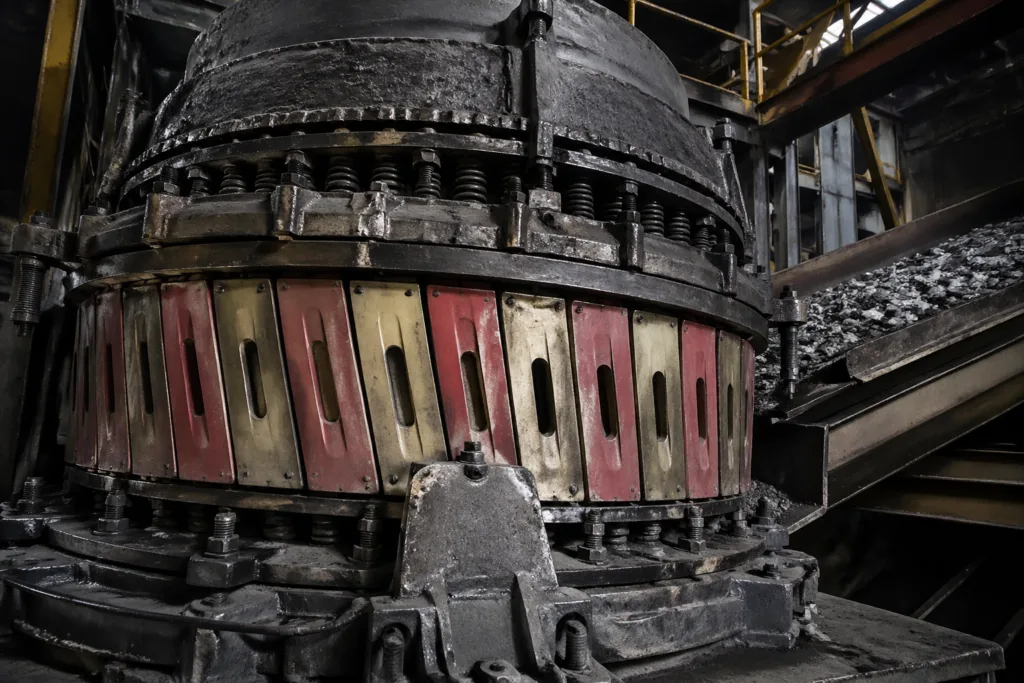
Crusher backing and foundation grouting epoxy might sound similar, but their purpose, design, and benefits differ greatly. It’s important to choose the correct product for your specific equipment or structural challenge to maximize lifespan and efficiency.
Chemical Composition and Formulation Differences
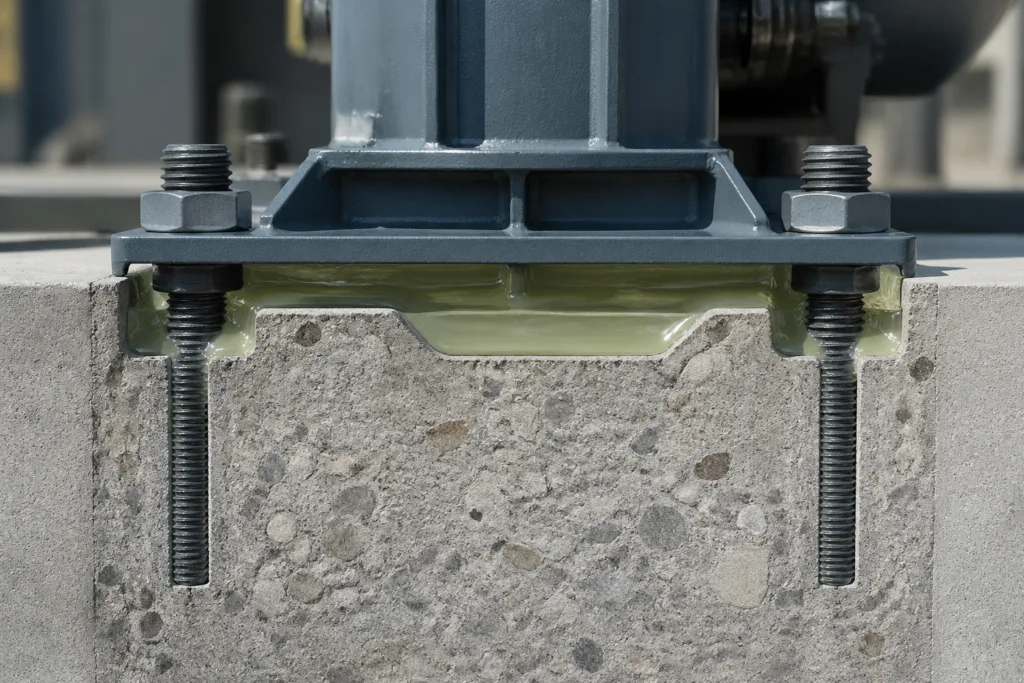
The resin chemistry determines how each material handles daily wear, vibration, and dynamic loads. Most crusher backings are formulated as two-part epoxy or polyurethane systems loaded with mineral fillers, providing high compressive strength and excellent adhesion to metal. Foundation grouting epoxy, on the other hand, often uses high-flow, solvent-free resin technology that creates a strong bond between equipment and concrete bases while maintaining dimensional stability.
Applications of Crusher Backing in Mining and Construction
Crusher backing materials are used extensively in mining operations for cone and gyratory crushers. Their job: fill the space between the crusher liners and the supporting structure, locking everything in place and absorbing shock and vibration. When crushers handle thousands of tons of ore per day, a reliable backing prevents liner movement, avoids metal-to-metal contact wear, and helps protect boilerplate integrity beneath high-stress loads.
Applications of Foundation Grouting Epoxy
Foundation grouting epoxy is essential in securing heavy machines and industrial equipment—from compressors and turbines to ball mills—solidly to concrete foundations. Its flowable nature allows it to fill gaps between equipment bases and the grout bed, ensuring complete contact, robust support, and long-term structural integrity in dynamic and static load environments.
Performance Characteristics: Crusher Backing vs. Grouting Epoxy
The performance expectations for crusher backings center on compressive strength, impact resistance, and ease of removal at liner change-out. For grouting epoxies, flowability, volumetric stability, resistance to chemical/corrosive exposure, and bonding to both metal and concrete are paramount.
Comparison Table: Key Properties
| Property | Crusher Backing | Foundation Grouting Epoxy |
|---|---|---|
| Compressive Strength | High (often > 100 MPa) | Very High (up to 120 MPa+) |
| Flexural Strength | Moderate | High |
| Impact Resistance | Very High | Moderate-High |
| Chemical Resistance | Good | Excellent |
| Flowability | Low-Moderate | High |
| Bond to Concrete | Poor-Moderate | Excellent |
| Bond to Metal | Excellent | Excellent |
| Temperature Resistance | Up to 120°C typical | Can be formulated up to 150°C+ |
| Ease of Application | Simple toolkit, manual pour | Pumpable, requires prep and mixing discipline |
Durability Under Harsh Working Conditions
Properly selected and applied crusher backing will protect critical components through years of high-impact crushing cycles, even as temperature and vibration fluctuate. Grouting epoxy, with its ability to soak up shear stresses, provides long-lasting service in environments subject to constant compressive and torsional forces.
Ease of Application and Installation
Crusher backing is usually installed during liner changeouts; users pour or trowel the pre-mixed material between the new liner and support structure. Fast-setting, some products like ZDS-1410AB are engineered for reliable application in variable site conditions, reducing downtime between pours and put-back-in-service. Grouting epoxy, meanwhile, sometimes requires careful priming, mixing in precise ratios, and air release steps for thick pours. Application teams often reference heavy machinery epoxy grout best practices to ensure site-ready, fail-safe installation.
Cost-Effectiveness Over the Equipment Lifecycle
While initial material costs for both technologies are comparable, the true savings show up in operational uptime and reduced maintenance. Crusher backing prevents catastrophic liner slippage, reducing unplanned shutdowns. Foundation grouting epoxy maximizes machine alignment and minimizes micro-movement that leads to premature bearing or bolt issues.
Impact on Structural Integrity and Equipment Maintenance
Equipment is only as stable as its support structure. The right backing or grout secures your investment, maintaining alignment under stress and absorbing machinery vibration. This not only preserves bases and foundations, but also prevents minor misalignments that can spiral into expensive repairs.
Real-World Example: Mining Crusher Support
In one mining operation, a cone crusher was experiencing periodic liner slippage and metal-to-metal pounding. By switching to a high-compressive, vibration-resistant backing, the maintenance team observed a sharp decline in liner wear and fewer unscheduled stops. They followed strict mixing protocols and batch records, echoing many practical strategies ZDSpoxy recommends for consistent field performance.
Case Study: Machinery Foundation Restoration
An industrial compressor unit began showing bolt loosening and excessive vibration. Engineers chose an advanced grouting epoxy system, using an Epoxy Grout Volume Calculator Project Quote tool to properly estimate batch requirements and minimize waste. After foundation grouting, machine stability improved dramatically, and regular maintenance cycles were extended by several months.
Installation Challenges: Preparing for Success
Good results begin with substrate prep. For crushers, removing residual dust, oil, and old backing is essential. Machines set on epoxy grout demand perfectly clean concrete, with oil and moisture contamination mitigated through primer selection and environmental controls.
Mixing Ratios, Pot Life, and Batch Controls
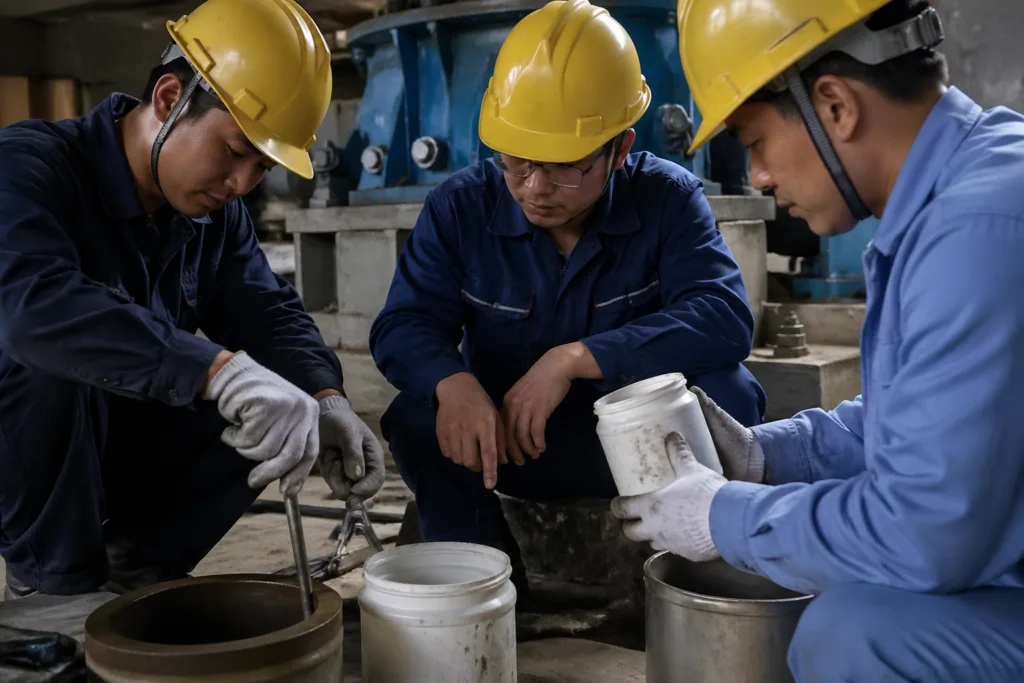
Both materials require precise part A-to-part B ratios. Over- or under-catalyzation can lead to soft spots, shrinkage, or incomplete curing. Epoxy grouts are sensitive to batch size, temperature, and pot life, so controlling mix times and pour speeds is vital, especially in large foundations or under tight deadlines.
Strength and Shrinkage: What to Expect
Crusher backing is formulated to cure with minimal shrinkage, ensuring tight gravity-fit and mechanical lock. Grouting epoxies often use non-shrink technology, preserving full bearing contact beneath heavy machinery. Testing compressive and flexural strength at prescribed cure intervals is standard industry practice.
Chemical and Temperature Resistance
Both materials are engineered for moderate to high chemical resistance. But for extreme exposure (acids, solvents), epoxy grout can be customized—such as in refineries or marine environments. For high heat (over 120°C), specialty grouts like ZDS-4120AB deliver proven performance under thermal cycling.
Environmental and Safety Considerations
Safety comes first. These materials are typically low-VOC and solvent-free, but PPE (gloves, goggles) and ventilation are always required. Storage in dry, temperature-controlled conditions extends shelf life and keeps reactive components separated until mixing.
Choosing the Right Product for Your Application
Ultimately, the choice boils down to: Are you dampening shock and locking liners in a high-wear metallic environment (crusher backing)? Or are you bonding and leveling heavy rotating equipment on concrete (grouting epoxy)? Analyze your operational loads, fixity needs, substrate compatibility, and total cost of ownership.
Industry Standards and Quality Assurance
Look for products with proven performance metrics—compressive strength, chemical resistance, thermal cycling tolerance. Reliable manufacturers will provide batch records, third-party test data, and practical recommendations for installation, much like those outlined by technical support teams at ZDSpoxy, where real-world feedback refines every new formulation.
Latest Innovations in Crusher Backing and Epoxy Grout
Recent advances focus on enhanced flow, safer handling, and better long-term durability. Low-exotherm formulations and highly filled grouts decrease temperature rise, reducing risk of micro-cracks after curing, while improved fillers contribute to early strength development and vibration resistance.
Troubleshooting Common Failures
Premature wear, improper curing, cracking, and delamination are common risks if products are incorrectly mixed or applied. Surface cleanliness, temperature, and mixing discipline dictate final cure outcome. Always follow technical data sheets and conduct small test pours where possible.
Why Proper Support Materials Matter: Structural and Economic Impacts
Using the correct support materials maximizes uptime, reduces unplanned stops, and preserves the structural condition of expensive capital equipment. Neglect can lead to severe repairs, costly downtime, and decreased ROI. The upfront investment in premium-quality crusher backing or grouting epoxy pays back many times over across the equipment lifecycle.
How to Specify: Checklist for Project Engineers and Maintenance Managers
- List equipment make, model, and base size
- Specify operating loads and vibration class
- Detail substrate (metal type, concrete age and prep method)
- Document environmental exposures (temperature, chemicals, moisture)
- Specify installation window/timeframe
- Clarify removal needs at end-of-life (for crusher backing)
Crusher Backing, Grouting Epoxy: Future Directions
With increasing demands for higher output and reduced maintenance, both crusher backing and grouting epoxy will see ongoing innovation. Sustainable chemistry, safer application profiles, and data-driven selection tools will likely define the next generation of support solutions for heavy industry.
Conclusion
Understanding the trade-offs between crusher backing and foundation grouting epoxy helps ensure safe, durable, and cost-efficient support for mission-critical equipment. Always align the product to your unique application, informed by field experience and robust technical data. For those committed to reliability, the right choice makes all the difference.
Frequently Asked Questions
What is the main function of crusher backing?
Crusher backing is designed to fill the space between crusher liners and the structure, locking liners in place and absorbing shocks and vibrations to prevent damage.
How does foundation grouting epoxy differ from traditional cement grout?
Foundation grouting epoxy has much higher strength, flows into tight spaces, bonds exceptionally to metal and concrete, and resists shrinkage—far outperforming standard cement grout in demanding applications.
Which material is better for high-vibration environments?
Crusher backing is specially formulated for extremely high-impact, high-vibration conditions in metallic components, whereas grouting epoxy is ideal for absorbing constant loads and subtle vibrations in machine foundations.
Can I use foundation grouting epoxy for crusher backing?
No, the formulations are tailored for different uses: epoxy for foundations needs high flow and concrete bonding, while crusher backing needs maximum impact resistance and easy removal during liner changes.
How do I estimate how much epoxy grout I need for a project?
Use specialized tools like the Epoxy Grout Volume Calculator Project Quote to estimate requirements accurately based on equipment footprint, gap size, and installation parameters.
What are key installation tips to ensure durability?
Ensure surfaces are thoroughly cleaned, follow mixing ratios precisely, work within specified pot life, and pour in the recommended environmental conditions for optimal results.
Related Reading
- Expert Tricks for Long-Lasting Grouting in Ball and SAG Mills
- Turbo-Machinery Grouting: Soleplate vs Baseplate Benefits You Should Know
- Where Epoxy Grout Excels: From Crushers to Compressors
- How Grout Stiffness Affects Vibration and Resonance
- Solving Vibration Issues: Compressor Grouting in Practice