
Choosing the right epoxy grout for shower floors and wet areas is less about brand labels and more about matching formulation, joint design, substrate condition, cleaning exposure, and service environment. From our manufacturing perspective, the best system is the one that keeps water absorption low, resists staining from soaps and body oils, maintains color under cleaning and heat, and can still be installed predictably by the crew on site. For shower floors, steam showers, wet rooms, and spa areas, grout selection affects hygiene, maintenance load, drain perimeter durability, and the long-term integrity of the tiled assembly.
Explore epoxy grout system options for wet-area applications when comparing resin chemistry, joint-width suitability, cure profile, and installation requirements across different shower and wet-room specifications.
Executive Summary
For most residential and commercial shower floors, a two-component epoxy grout system with low water absorption, strong stain resistance, and stable color performance is the practical benchmark. In steam showers and high-temperature wet rooms, heat tolerance, dimensional stability, and compatibility with movement joints become more important. In hotel spas, locker rooms, and chemically aggressive cleaning environments, chemical resistance and cleanability often matter more than initial installation speed.
| Wet-area scenario | Preferred grout type | Main reason | Key watchpoint |
|---|---|---|---|
| Standard shower floor | Two-component epoxy grout | Low absorption and easy cleaning | Proper haze removal during installation |
| Steam shower | Heat-stable epoxy system | Better moisture and thermal durability | Movement accommodation at transitions |
| Wet room | Epoxy grout with balanced flow and hardness | Drain-area wear resistance | Substrate flatness and slope consistency |
| Glass mosaic shower wall | Fine-joint, color-stable epoxy grout | Appearance and joint filling accuracy | Tile face cleanup without scratching |
| Spa or chlorine-cleaned area | Chemical-resistant epoxy grout | Resistance to disinfectants and cleaners | Supplier test data for exposure conditions |
Who This Guide Is For
This guide is written for contractors, tile installers, specifiers, facility managers, OEM brands, and procurement teams that need specification-ready logic rather than generic product claims. We have structured it around the questions buyers actually ask: What performance data should be requested? Which grout type fits narrow joints or sensitive tile? How should moisture, cure speed, and cleaning exposure affect the decision? What installation mistakes create haze, discoloration, or bond problems later?
Why Choosing the Right Epoxy Grout Matters in Wet Areas
Showers are persistent stress environments. Water sits in low points, soap and shampoo leave residue, disinfectants attack weak chemistries, and temperature swings can accelerate discoloration or movement stress. Cement-based grout can work in some installations, but where hygiene, stain resistance, and maintenance reduction are priorities, epoxy systems usually offer a stronger long-term value proposition.
The risk is not only visible staining. A poor grout choice can contribute to difficult cleaning, surface softening, premature wear near drains, and recurring complaints about yellowing or uneven color. In wet rooms, selection errors can also complicate maintenance because once epoxy haze, poor joint packing, or movement-related edge failure appears, correction is labor-intensive.
Core Performance Criteria for Shower-Grade Epoxy Grout
Waterproofing and low water absorption
Epoxy grout is selected for wet areas because it typically absorbs far less water than cementitious grout. Low absorption helps reduce darkening, limits retention of soap residue, and supports a more hygienic surface. It is still important to state clearly that grout is not a replacement for the underlying waterproofing system. The membrane, drain details, and movement joints still determine whether the shower assembly manages water correctly.
Chemical and cleaning resistance
Shower floors are exposed to alkaline cleaners, mild acids, shampoos, surfactants, body oils, bleach-based products in some facilities, and chlorine-related products in spa settings. A shower-grade epoxy grout should resist surface softening, color washout, and gloss change after repeated cleaning. Procurement teams should request chemical exposure guidance for the exact maintenance products used on site, not generic statements alone.
Stain resistance and color stability
Stain resistance depends on resin chemistry, filler choice, pigment stability, and cure completeness. Color stability matters even more in light-colored grout lines, decorative wet rooms, and wall applications with daylight exposure. Slight ambering that is tolerated on darker floor joints may be unacceptable on white or pastel wall joints. Where surrounding coatings or protective layers are involved, an anti-yellowing topcoat to maintain grout color stability can be relevant in exposed wet-area designs that prioritize appearance retention.
Abrasion resistance and mechanical durability
Shower floors and drain perimeters see concentrated foot traffic, abrasive particles, and repetitive cleaning. A suitable grout should resist surface wear, especially on textured tiles where scrubbing is more aggressive. High abrasion resistance helps joints stay dense instead of becoming rough and harder to clean over time.
Flexibility versus hardness
Harder epoxy grout can improve wear resistance, but overly rigid systems may be less forgiving where substrates move, especially at transitions, corners, or assemblies with thermal cycling. The goal is not maximum hardness in every case. It is balanced performance: enough surface strength for floors, enough toughness to tolerate service stresses, and clear compatibility with movement-joint design.
Bond strength to tile and adjacent materials
Strong bond performance helps reduce edge pullout and washout under cleaning. Tile type matters. Porcelain and glass present very different surface characteristics than natural stone. Bond quality also depends on whether the joint is clean, dry enough for the specified system, and fully packed during installation.
Technical Product Types and Formulation Choices
Two-component epoxy vs epoxy-modified cementitious grout
For shower floors and other consistently wet zones, we generally see the clearest durability advantage from true two-component epoxy systems. Epoxy-modified cementitious grout may improve some properties compared with standard cement grout, but it usually does not match a properly formulated epoxy system for low absorption, stain resistance, or aggressive cleaning durability. The trade-off is that true epoxy requires tighter installation discipline.
Sanded vs unsanded epoxy grout
Joint width, tile edge quality, and finish expectations should guide this decision. Sanded epoxy formulations are often preferred for wider joints and floor durability. Unsanded or finer-filled systems can be better for narrow joints, delicate surfaces, and fine mosaics where packing consistency matters. For small-format tile and dense shower layouts, ZDS-4131AB low-viscosity grout for fine shower joints reflects the type of formulation logic many installers need when flow into narrow seams is a priority.
Fast-cure vs standard-cure systems
Fast-cure epoxy grout can shorten return-to-service time, which matters in hospitality, commercial washrooms, and renovation work. Standard-cure systems usually provide longer working time and can be easier for crews handling detailed cleanup. Selection should reflect crew experience, ambient temperature, section size, and how quickly the area must be reopened.
Mould-inhibiting additives
These may be useful where hygiene requirements are strict or ventilation is poor, but they should not distract from the fundamentals: low absorption, dense joints, effective waterproofing details, and maintenance discipline. Surface contamination and soap buildup can still occur if cleaning is neglected.
Color retention for shower walls and floors
Walls often have higher appearance sensitivity, while floors face heavier abrasion. In our formulation work, pigment selection and resin stability are evaluated differently depending on whether visual consistency or mechanical wear is the dominant concern. Light colors, translucent tile, and decorative mosaics deserve extra caution during product selection and field sampling.
Selection Checklist: What to Request From Suppliers
Decision-makers should ask suppliers for test data and handling information that directly supports the project conditions. Useful items include:
- Water absorption behavior or equivalent low-permeability performance data
- Chemical resistance guidance for cleaners, disinfectants, and chlorine exposure
- Abrasion resistance indicators for floor use
- Hardness range and toughness characteristics
- Bond or adhesion performance to intended tile types
- Pot life and working time at stated temperatures
- Initial cure and full cure schedule
- Recommended service-entry timing for wet exposure
- Joint width compatibility
- Cleanup method and approved cleaning agents during installation
For tight tile layouts and narrow seams, the product should be screened not only for strength but also for viscosity and filling behavior. Systems similar in concept to ZDS-3382AB grout for tight spaces and narrow tile joints are often easier to evaluate when the design uses small mosaics, slim joints, or dense patterns that are difficult to pack consistently.
Substrate and Tile Compatibility Guidance
Ceramic and porcelain
These are generally the most straightforward surfaces for epoxy grouting, provided the joints are clean and the tile face allows timely haze removal. Dense porcelain often benefits from careful trial cleanup because some textured finishes hold residue more aggressively than expected.
Natural stone
Stone needs extra caution because porosity, sensitivity to color transfer, and face texture vary widely. Pretesting is essential. Some stones can darken temporarily or retain film if the wrong cleanup method is used.
Glass mosaic
Glass makes color consistency and scratch avoidance critical. Fine filler size, proper squeegee angle, and careful wash timing matter more than on standard floor tile.
Engineered stone and specialty surfaces
These should always be checked for chemical sensitivity, face coating compatibility, and thermal movement behavior. Do not assume all manufactured surfaces behave like porcelain.
Membranes, cement boards, and concrete bases
Grout performance depends on what sits beneath the tile. Waterproof membranes must be fully cured and compatible with the tile adhesive and grout system. Cement boards should be dimensionally stable and correctly fastened. Concrete or mortar bases in wet construction sometimes present residual moisture concerns before adjacent resin materials are applied. Where primers are part of the assembly detail, a solvent-free epoxy primer for damp substrates and wet concrete can be relevant for surrounding substrate-preparation logic, although the grout itself still needs to be selected on its own service requirements.
Installation Workflow for Shower Floors
Joint sizing and profile
Uniform joint width supports consistent cure and appearance. Drain areas deserve special attention because irregular cuts and slope changes create shallow or distorted joints that are harder to pack densely.
Mixing procedures
Accurate component ratio and complete blending are essential. Partial mixing without weight control can create soft spots, uneven color, or cure inconsistency. We recommend following the supplier’s batch size rules closely, especially in warm conditions where reaction speed increases.
Contamination control and tools
Dirty water, dusty joints, oily hands, and reused contaminated buckets can all affect final appearance. Use clean mixing tools, fresh wash water, and dedicated sponges or pads appropriate for epoxy cleanup.
Application technique
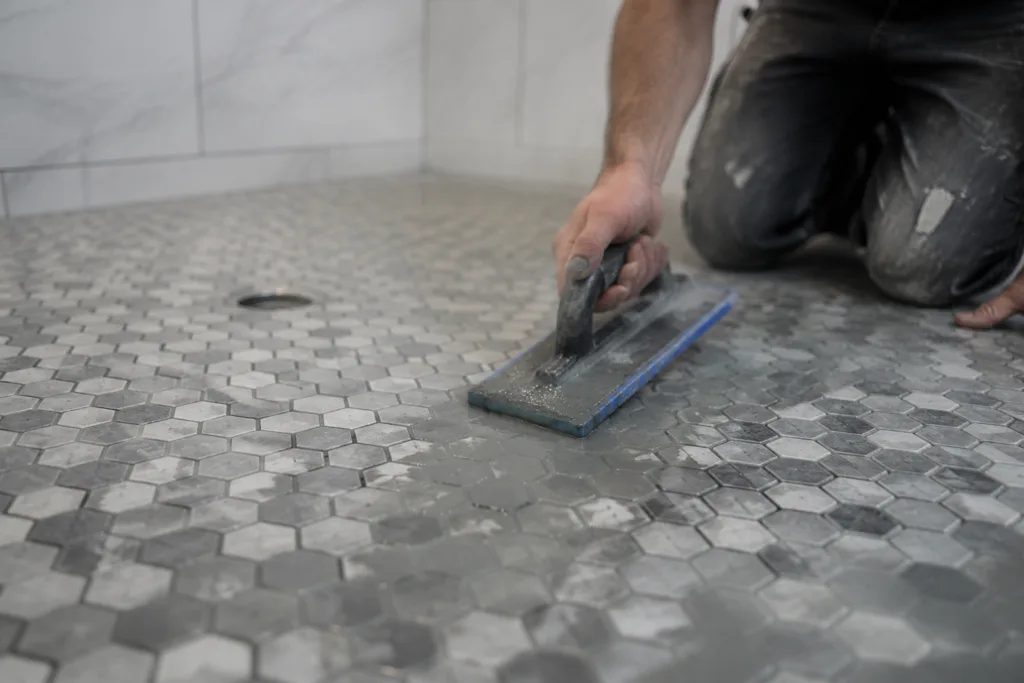
Force the grout fully into the joints, then remove excess diagonally across the tile. Avoid leaving ridges on textured surfaces, because hardened residue is far more difficult to remove than fresh excess. On production projects, mock-up panels are useful to confirm wash timing and final color.
Temperature, humidity, and ventilation
High temperature shortens pot life and can make cleanup windows tighter. Low temperature slows cure and may delay wet service. Poor ventilation can make indoor work less comfortable and may slow moisture release from the surrounding assembly. At ZDSpoxy, we usually advise buyers to review installation temperature range, batch size, and service-entry timing together rather than as separate data points.
Cleaning fresh epoxy grout from tile
Fresh cleanup should use the supplier’s approved method, often involving water with designated pads, emulsifying cleaners, or other specified aids depending on the system. Harsh solvent experimentation on sensitive tile is a common mistake. Mechanical removal should stay non-abrasive enough to avoid scratching glass, polished porcelain, or stone faces.
Curing, Post-Installation Checks, and Time to Service
Before opening a shower or wet room to service, verify that the grout has reached the stated cure stage for water exposure. Initial hardness does not always equal full chemical resistance. Post-installation checks should confirm uniform fill, absence of sticky or soft areas, clean tile faces, stable color, and sound movement-joint detailing at transitions and corners.
Maintenance and Cleaning Protocols
Even stain-resistant grout benefits from good maintenance. Use non-abrasive cleaners compatible with the installed chemistry, rinse residues thoroughly, and avoid leaving concentrated cleaner in corners or low spots. Soap scum is often a maintenance issue rather than a grout failure, but once buildup hardens, the surface can appear discolored even when the grout itself remains intact.
Troubleshooting Common Failures and Fixes
Yellowing or discoloration
Potential causes include resin ambering, incomplete cure, aggressive cleaners, heat exposure, retained film, or contamination during installation. Investigation should review batch handling, cure conditions, cleaning chemicals, and whether the discoloration is in the grout body or only on the surface.
Adhesion failures and delamination
Check for dusty joints, moisture-related substrate problems, incorrect mixing ratio, shallow joint fill, or movement that should have been handled by sealant joints rather than grout. Bond issues near drains often point to joint geometry or cleaning-water contamination during installation.
Surface residue, haze, and ghosting
These usually come from delayed cleanup or over-spreading on textured tile. Removal should start with the least aggressive approved method. Waiting too long often turns a simple cleanup issue into a costly remediation task.
Cracking or chalking
True cracking in epoxy grout often indicates assembly movement, poor joint design, or use in locations that should have had flexible sealant joints. Chalking or surface weakness may suggest off-ratio mixing, incomplete blending, or chemical attack.
Typical Specification Choices by Use Case
Residential shower floors
A balanced two-component epoxy grout with good stain resistance, moderate working time, and reliable cleanup is usually the practical choice. Narrow-joint capability matters where mosaics or modern tile layouts are used.
Steam rooms and high-temperature wet areas
Specify a system with stable cure under elevated temperature exposure and verify compatibility with movement joints, membrane details, and cleaning chemicals. Appearance retention should be checked separately from pure strength metrics.
Hotel spa or high chemical-exposure areas
Prioritize chemical resistance, dense joint fill, maintenance compatibility, and documented cure-to-service timing. Fast return to operation may justify a faster-curing formulation, but only if installers can manage the shorter working window.
Custom Formulation and OEM Considerations
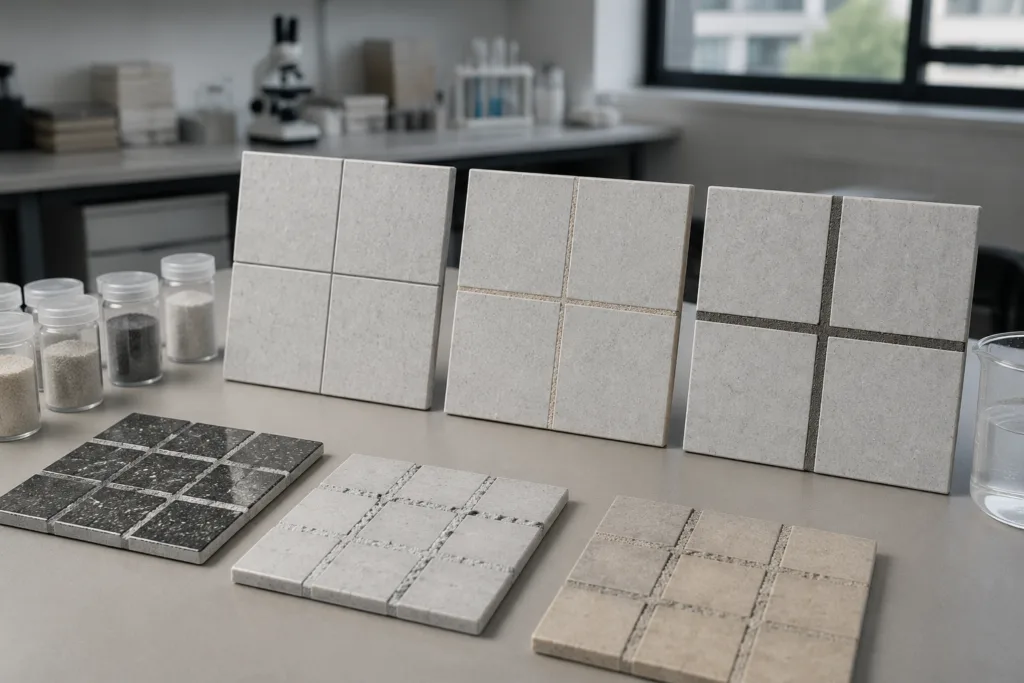
From a manufacturer perspective, custom epoxy grout selection often comes down to adjusting viscosity, cure speed, pigment package, filler profile, and cleanup behavior to fit a target installation style. Small-batch evaluation is useful when an OEM brand, distributor, or project team needs a specific joint-width range, a certain color family, or different working time for hot-climate installation. The most useful sample requests include tile type, joint dimensions, ambient conditions, cleaning process, and expected service exposure.
Procurement and Quality Assurance Checklist
- Request technical data and installation instructions before final approval
- Verify joint-width suitability for the selected tile layout
- Review cure schedule against project handover timing
- Run a pilot patch on actual tile and under realistic site conditions
- Confirm compatibility with membranes, sealants, and cleaning chemicals
- Check installer familiarity with epoxy haze removal and batch control
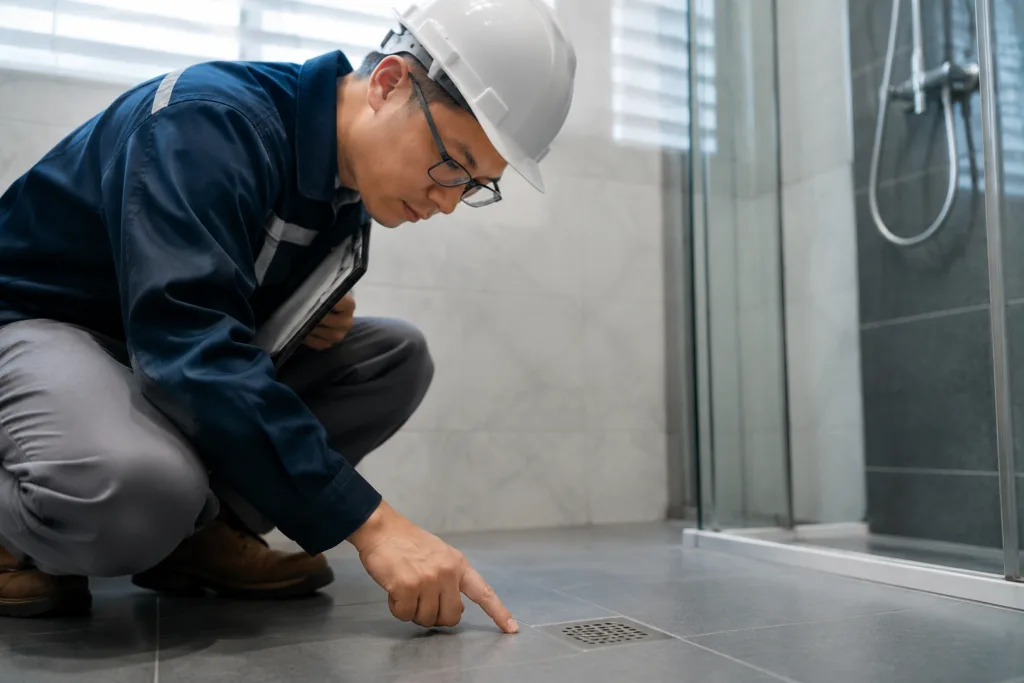
- Inspect drain details, corners, and movement joints before grouting starts
- Document batch numbers and ambient conditions during installation
What to Include in a Comparison Table
When comparing suppliers, include water resistance, chemical resistance scope, abrasion durability, hardness profile, joint-width range, pot life, service-entry timing, cleanup method, color options, and any limitations on tile type or wet exposure. That structure gives specifiers and procurement teams a more defensible basis for decision-making than simple price comparison.
Conclusion
The best epoxy grout for shower floors and wet areas is the one that fits the actual service conditions, tile geometry, installer capability, and maintenance regime. For most projects, a true two-component epoxy system will offer the strongest combination of low absorption, stain resistance, color retention, and durability. The safest next step is to shortlist products by joint width and exposure type, request technical data and a site mock-up, then verify cure, cleanup, and appearance on the actual tile before full installation.
Frequently Asked Questions
Is epoxy grout for shower floors fully waterproof?
Epoxy grout is highly water-resistant and typically absorbs very little water, but it does not replace the shower waterproofing membrane, drain detailing, or movement-joint design beneath the tile assembly.
What is the main advantage of epoxy grout in wet areas?
The main advantage is the combination of low water absorption, strong stain resistance, and easier long-term cleaning compared with standard cement-based grout in demanding wet environments.
Can epoxy grout be used with glass mosaic in a shower?
Yes, but the grout should have suitable filler size, color stability, and cleanup characteristics for fine joints and delicate tile faces, and a field test is strongly recommended before full installation.
How soon can a shower be used after epoxy grouting?
That depends on the specific cure schedule, site temperature, and humidity, so the area should not be exposed to water until the supplier’s stated wet-service cure time has been reached.
Why does epoxy grout turn yellow or look discolored?
Discoloration can come from resin ambering, aggressive cleaners, incomplete cure, retained surface film, heat exposure, or installation contamination, so the cause should be identified before choosing a repair method.
What should buyers request from an epoxy grout supplier?
Buyers should request technical data on water resistance, chemical resistance, joint-width range, pot life, cure schedule, cleanup method, tile compatibility, and a sample or pilot-patch process for the intended wet-area installation.