
Epoxy tile grout is the right specification when a tile installation must resist water, staining, chemicals, abrasion, and repeated cleaning better than conventional cementitious grout. For bathrooms, pools, commercial kitchens, mosaics, porcelain tile, and high-traffic floors, the decision should be based on exposure severity, joint geometry, substrate condition, cure schedule, and long-term maintenance cost rather than material price alone.
For project teams comparing grout chemistry and performance options, it is useful to explore epoxy grout solutions for durable tile installations before finalizing joint design, application conditions, and procurement requirements.
When Epoxy Tile Grout Is the Right Choice
Use epoxy tile grout when the tile joint is expected to face continuous moisture, aggressive cleaning, grease, pool chemicals, food acids, high foot traffic, or strict appearance requirements. Cementitious grout can perform well in low-risk residential areas, but it is more porous, more dependent on sealing, and more vulnerable to staining, efflorescence, and erosion under harsh cleaning or immersion.
From our manufacturing perspective, the main decision shortcut is simple: if failure would create hygiene risk, waterproofing problems, repeated shutdowns, visible staining, or expensive re-grouting, epoxy grout usually deserves specification review. The higher initial material and labor cost can be justified when reduced maintenance, lower water absorption, and better chemical resistance matter over the life of the project.
Quick Decision Checklist for Specifiers and Contractors
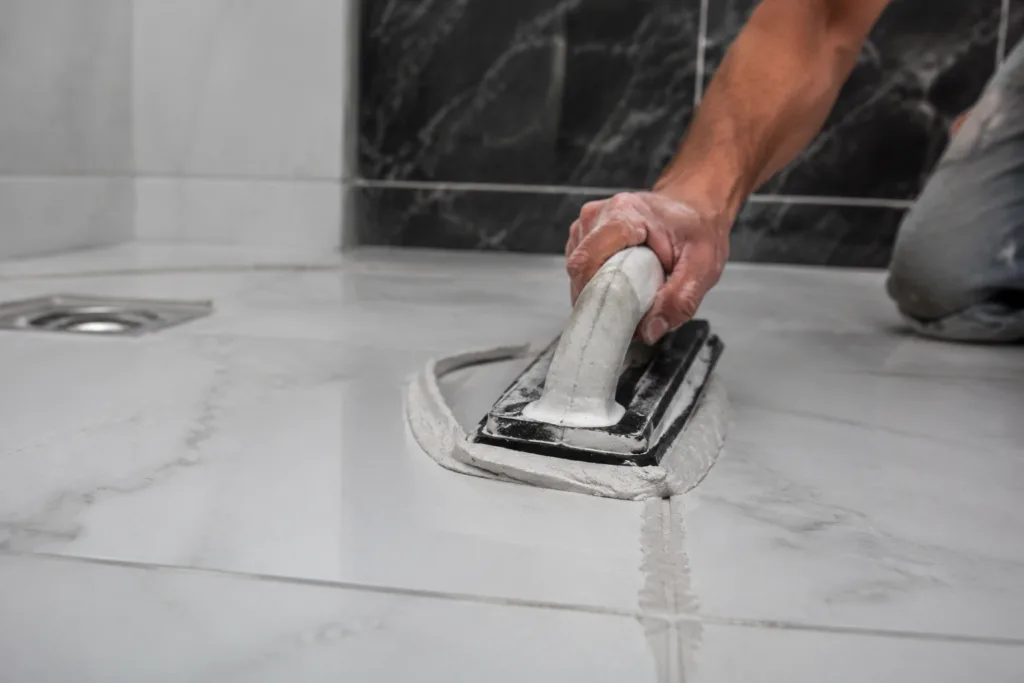
Before choosing an epoxy grout, confirm the following project conditions. These items help prevent mismatch between formulation, tile type, joint design, and site schedule.
- Joint width: narrow joints require low viscosity and smooth filling; wide joints may need higher body and sag control.
- Exposure: identify water, immersion, grease, acids, alkalis, disinfectants, pool chemicals, or thermal shock.
- Traffic: commercial floors need abrasion resistance, impact tolerance, and predictable return-to-service timing.
- Tile type: porcelain, glass mosaic, natural stone, terrazzo, and textured tile each affect cleaning and residue control.
- Substrate: check moisture, movement, cracks, contamination, flatness, and compatibility with primers or membranes.
- Aesthetics: review color match, pigment stability, UV exposure, residue risk, and mockup acceptance criteria.
- Installation window: pot life, working time, wash timing, and cure speed must match crew size and ambient conditions.
Why Epoxy Grout Performs Differently
Epoxy grout is typically based on resin, hardener, pigments, and selected fillers. After mixing, the resin system cures into a dense, low-absorption polymer matrix. This differs from cement grout, which relies on hydration and remains more mineral-based and porous.
The practical advantages are stain resistance, low water uptake, strong adhesion to tile edges, high abrasion resistance, and improved resistance to many cleaning chemicals. In wet rooms and food-prep spaces, the dense surface can also reduce the conditions that allow mildew staining to become embedded in the grout body.
Typical cementitious grout failure modes include powdering, cracking from movement or shrinkage, discoloration, efflorescence, water penetration, and loss of surface profile from scrubbing. Epoxy grout can also fail, but the causes are usually different: wrong mix ratio, poor cleaning timing, moisture trapped behind the joint, substrate movement, amine blush, or use of a formulation not suited to chemical or UV exposure.
Types of Epoxy Grout and Formulation Differences
Not all epoxy grout systems are the same. The formulation determines viscosity, pot life, cure speed, flexibility, cleaning behavior, color stability, and immersion resistance.
| Grout Type | Typical Strength | Key Trade-Off | Common Use |
|---|---|---|---|
| 100% solids epoxy grout | Low shrinkage, high chemical and water resistance | Requires careful mixing and cleanup timing | Pools, wet rooms, kitchens, industrial tile floors |
| Epoxy-modified cementitious grout | Improved performance over cement grout | May not match full epoxy chemical or immersion resistance | Moderate-duty tile areas |
| Epoxy-polyurethane hybrid grout | Improved flexibility and appearance options | Performance depends strongly on formulation chemistry | Areas needing movement tolerance and cleanability |
Low-viscosity systems are useful for fine joints, tight tile gaps, and detailed mosaic work. For example, ZDS-4131AB low-viscosity epoxy grout for fine tile joints is relevant where flow into narrow seams is more important than heavy vertical build.
Higher-filled systems may offer better body for wider joints or vertical work, but they can be harder to push into small gaps. Faster cure improves return to service, but shortens working time and raises the risk of waste or incomplete washing. Longer pot life helps large floor areas, but may delay opening to traffic.
Tile and Substrate Compatibility Checks
Installers should confirm compatibility before applying epoxy grout to ceramic, porcelain, natural stone, glass mosaics, terrazzo, commercial porcelain, or precast concrete assemblies. Dense porcelain and glass can limit mechanical keying, so clean tile edges and proper joint depth become especially important.
Natural stone requires extra caution because some stones can darken, absorb resin components, or retain cleaning residue. A mockup is strongly recommended for marble, limestone, textured stone, translucent glass, and polished surfaces. Test the actual tile, grout color, wash method, and lighting conditions before full installation.
Substrate movement is another key risk. Epoxy grout is durable, but it is not a substitute for movement joints, waterproofing membranes, or structural crack repair. If tile assemblies are still moving, grout cracking or edge debonding can occur even when the resin system itself cures correctly.
Where moisture vapor, efflorescence, or contaminated concrete is present, project teams may need a primer, moisture barrier, or adhesion promoter. At ZDSpoxy, we evaluate grout selection by looking at the full assembly: tile, joint width, substrate, exposure, cleaning regime, and required cure window.
Application Guidance by Project Scenario
Bathrooms and Wet Rooms
Bathrooms need low water absorption, shrinkage control, mildew-stain resistance, and reliable cure under moderate humidity. Low odor and low-VOC preferences may also matter for occupied buildings. The main pitfalls are grouting too soon after waterproofing, leaving residue on textured tile, and opening the shower before adequate cure.
Pools and Immersed Surfaces
Pool tile joints require immersion resistance, chemical resistance to treated water, tolerance to alkaline conditions, and stability under thermal cycling. A 100% solids epoxy system is often preferred for submerged areas because low shrinkage and dense cure reduce water pathways.
For swimming pools, spas, fountains, and wet repair zones, ZDS-1417AB high-strength underwater epoxy grout for pools is a useful reference point when evaluating immersion-grade grout attributes and bond requirements.
Kitchens and Food Preparation Areas
Commercial kitchens need grease resistance, cleanability, resistance to acidic food residues, and tolerance of alkaline degreasers. Specifiers should review SDS documentation, cleaning chemical compatibility, and site hygiene requirements. If the installation is part of a HACCP-controlled facility, define cleaning frequency, water temperature, and chemical exposure during specification.
Mosaics and Glass Tile
Mosaics and glass tile need smooth workability, low exotherm, color consistency, minimal haze, and easy residue management. Tight joints can starve if grout is too thick, while excessive wash water or late cleanup can leave film on glass surfaces.
For narrow mosaic joints and restricted spaces, ZDS-3382AB epoxy grout for tight tile gaps and mosaics illustrates why viscosity and flow behavior should be specified alongside strength and cure time.
Porcelain and Rectified Tile
Rectified porcelain commonly uses tight, consistent joints. The grout must pack fully without dragging, pin-holing, or leaving voids. High bond strength to tile edges matters because dense porcelain offers less absorption than traditional ceramic tile.
Commercial Floors
Retail spaces, hospitals, public washrooms, food plants, and industrial tile floors should prioritize abrasion resistance, impact resistance, chemical cleaning tolerance, and repairability. Downtime constraints are critical: a grout that cures too slowly may disrupt operations, while one that cures too fast may be difficult for the crew to install consistently across large areas.
Design and Joint Guidelines
Epoxy grout selection should follow the tile manufacturer, project specification, and applicable installation standards. In general, narrow joints need flow and fine filler control, while wider joints need sag resistance and enough compressive strength to resist traffic and cleaning wear.
Movement joints must not be filled with rigid epoxy grout unless the system has been specifically designed for movement. Use compatible sealants at perimeters, changes in plane, expansion joints, penetrations, and transitions. Rigidly locking these areas can transfer movement stress into the tile field.
| Design Condition | Specification Focus | Risk if Ignored |
|---|---|---|
| Tight rectified joints | Low viscosity, full packing, controlled cleanup | Voids, pinholes, poor edge bonding |
| Wide floor joints | Body, compressive strength, abrasion resistance | Sagging, wear, uneven surface profile |
| Wet corners and changes in plane | Movement joint and sealant compatibility | Cracking and water migration |
| High-temperature washdown | Thermal and chemical resistance review | Softening, discoloration, loss of bond |
Surface Preparation and Priming Protocol
Correct surface preparation is often more important than choosing the highest-strength grout. Tile joints must be clean, open, and free of dust, cement residue, release agents, oils, standing water, and loose material.
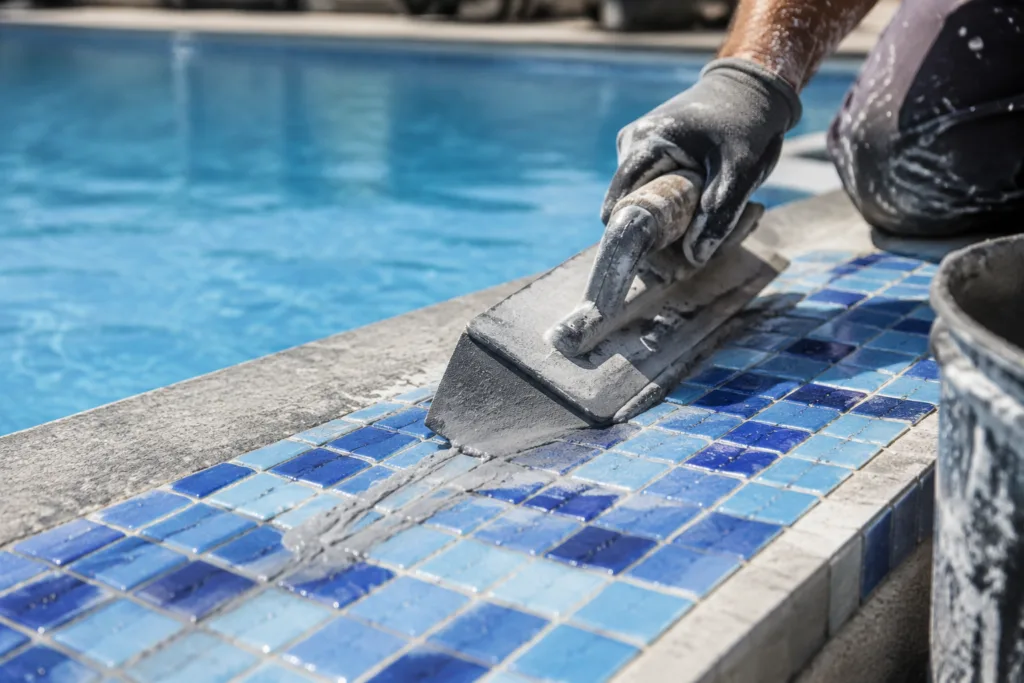
- Remove spacers, debris, laitance, and loose thinset from the joint.
- Confirm tile adhesive or mortar has cured sufficiently for grouting.
- Check joint depth and consistency before mixing epoxy grout.
- Verify that waterproofing membranes or primers are compatible and cured.
- Measure ambient temperature, substrate temperature, and humidity.
- Perform moisture checks where concrete, screeds, or immersed areas are involved.
- Prepare a mockup for textured tile, natural stone, glass, or unusual colors.
Primer is not always required, but it may be useful where substrate porosity, moisture vapor, contamination, or adhesion risk is present. The primer should be chemically compatible with the grout and must not create a weak film at the tile edge.
Mixing, Pot Life, and Application Best Practices
Epoxy grout should be mixed at the correct ratio using clean equipment and consistent timing. Guessing ratios, splitting kits inaccurately, or adding unapproved solvents can reduce cure quality, color consistency, and chemical resistance.
Use low-speed mixing to reduce air entrapment. Scrape container sides and bottom, then remix until the resin, hardener, pigment, and filler are uniform. For large projects, use batch sequencing so each mixed unit can be placed and washed within its workable time.
Application tools may include epoxy grout floats, rubber squeegees, margin tools, and appropriate cleaning pads. Oscillating tools may help with removal or repair work, but they should not damage tile edges. Warm conditions shorten pot life and increase cleanup urgency; cold conditions slow cure and can increase viscosity.
Cure Management and Quality Checks
Cure is affected by formulation, temperature, joint depth, substrate temperature, and ventilation. A surface that feels firm may not have reached full chemical resistance. This is especially important for showers, pools, commercial kitchens, and industrial floors.
Project teams should define tack-free time, light foot traffic time, heavy traffic time, water exposure time, and full cure before work begins. On-site checks may include visual inspection, fingernail hardness, residue assessment, bond review at test areas, and comparison against the approved mockup.
For broader planning across use cases, reviewing epoxy grout applications for bathrooms, pools, kitchens, and commercial floors can help align curing expectations with real exposure conditions.
Color Stability, Anti-Yellowing, and Appearance
Color performance depends on pigment chemistry, resin clarity, filler selection, UV exposure, cleaning chemicals, and surrounding tile color. White and very light grout colors are more sensitive to yellowing perception, staining, and cleaning residue. Dark colors can show haze if washing is incomplete.
Outdoor and pool environments require careful review of UV and alkaline resistance. Epoxy grout may discolor if the formulation is not designed for the exposure, or if harsh cleaners are used before full cure. For critical aesthetics, request color panels, accelerated exposure information when available, and a site mockup under actual lighting.
Cleaning, Maintenance, and Sanitation
Routine cleaning should use products compatible with the cured grout and surrounding tile. Neutral to mildly alkaline cleaners are common for general maintenance, while food plants and commercial kitchens may require stronger degreasers. Always confirm chemical exposure, dwell time, concentration, and rinse procedure.
Avoid aggressive abrasives unless the surface has been tested, because abrasive pads can dull tile or change the grout surface profile. Periodic inspections should look for cracked movement joints, edge gaps, impact damage, discoloration, and areas where water is standing after cleaning.
Common Problems, Root Causes, and Fixes
| Problem | Likely Root Cause | Practical Fix |
|---|---|---|
| Poor cure or soft grout | Wrong mix ratio, cold temperature, expired material, incomplete mixing | Remove affected grout, verify batch and conditions, reapply with controlled mixing |
| Pinholes or voids | Air entrapment, poor packing, grout too viscous for joint width | Open and refill voids; select lower-viscosity grout for tight joints |
| Amine blush or surface film | Humidity, low temperature, wash timing, formulation sensitivity | Clean according to manufacturer guidance; test before recoating or regrouting |
| Bond failure | Contaminated tile edges, movement, trapped moisture, incompatible substrate | Remove failed area, correct substrate issue, regrout after mockup confirmation |
| Discoloration | UV exposure, chemical attack, residue, pigment mismatch | Identify exposure source, clean or replace affected joints, revise cleaner or formulation |
Repair and Patch Procedures
Small repairs can often be made without removing the tile if the substrate is stable and the failure is localized. Remove damaged grout to a clean, sound depth, protect tile edges, vacuum dust, wipe contamination, and regrout using the same or approved compatible formulation.
Color blending is often the hardest part of repair. Existing grout may have aged, absorbed contaminants, or changed under UV exposure. For visible areas, prepare a small repair mockup and let it cure before approving full patching. Movement joints should be replaced with compatible flexible sealant, not rigid patch grout, unless the joint was incorrectly classified.
Performance Metrics to Specify
Specification should move beyond general terms such as durable or waterproof. Ask the manufacturer for test data and application guidance relevant to the project exposure.
| Metric | Why It Matters | Where It Is Most Important |
|---|---|---|
| Compressive and flexural strength | Resistance to load and joint edge stress | Commercial floors, industrial tile |
| Adhesion or pull-off performance | Bond to tile edges and substrate assembly | Porcelain, glass, wet rooms |
| Shore hardness | Surface cure and wear behavior | Floors, kitchens, public areas |
| Abrasion resistance | Long-term wear under traffic and cleaning | Retail, hospitals, food plants |
| Water absorption | Moisture resistance and stain reduction | Bathrooms, pools, wet rooms |
| Chemical immersion results | Resistance to cleaners, acids, alkalis, pool chemicals | Kitchens, pools, laboratories |
| Accelerated aging | Color and performance retention under UV or alkaline conditions | Outdoor tile, pools, light colors |
Acceptance values should be set according to application severity, not copied from a generic data sheet. For example, a hospital restroom, a swimming pool, and a residential backsplash may all use epoxy grout, but their chemical exposure, cleaning frequency, and cure requirements are different.
Procurement Checklist and Specification Language
A short-form specification can state: provide two-component epoxy tile grout suitable for the identified tile type, joint width, substrate, moisture exposure, cleaning chemicals, traffic level, and cure schedule. The grout shall be installed within manufacturer-defined ambient and substrate temperature limits, mixed at the stated ratio, applied by trained personnel, and accepted through mockup review before full installation.
Procurement teams should request SDS documents, technical data sheets, shelf-life information, batch traceability, packaging size, storage requirements, color documentation, lead time, and written application guidance. For larger projects, manufacturer support actions may include custom formulation review, QA checks, mockup evaluation, installer training, and troubleshooting support during early installation stages.
Cost, Lifecycle, and Manufacturer Selection
Epoxy grout costs more upfront than cementitious grout and may require more careful labor planning. However, lifecycle value can improve when the installation avoids repeated sealing, staining complaints, hygiene issues, water damage, and re-grouting downtime.
When evaluating a manufacturer or supplier, consider technical support depth, formulation flexibility, quality control documentation, batch consistency, realistic lead times, OEM or private label options, and willingness to discuss project-specific exposure. The right partner should help translate site conditions into grout properties, not simply recommend one product for every installation.
Quick Reference: Preferred Attributes by Scenario
| Scenario | Preferred Epoxy Attributes | Key Specification Concern |
|---|---|---|
| Bathrooms and wet rooms | Low absorption, stain resistance, controlled shrinkage, moderate working time | Shower cure time and residue-free finish |
| Pools and spas | 100% solids, immersion resistance, chemical resistance, UV and alkaline stability | Full cure before filling and thermal cycling tolerance |
| Commercial kitchens | Grease resistance, cleanability, chemical resistance, abrasion resistance | Cleaner compatibility and sanitation schedule |
| Glass mosaics | Low viscosity, smooth fillers, low exotherm, stable color | Haze control and visual consistency |
| Rectified porcelain | Thin-joint workability, strong edge bond, low pinhole tendency | Complete joint packing |
| Commercial floors | Abrasion resistance, impact tolerance, predictable return to service | Downtime and maintenance traffic |
Conclusion
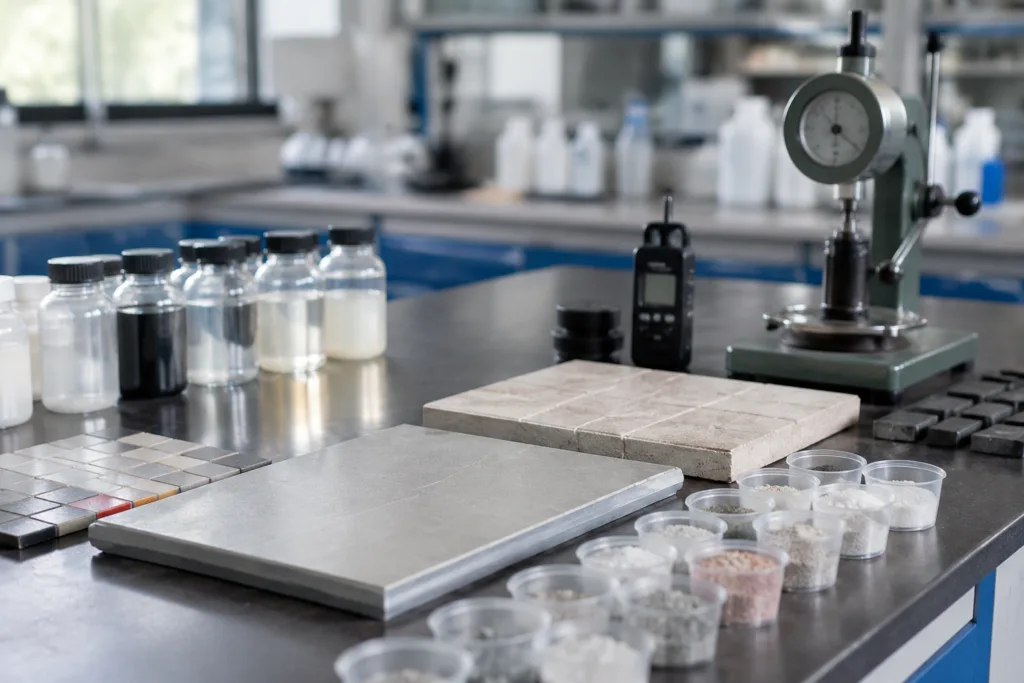
Epoxy tile grout should be specified when the tile joint is part of the performance system, not just a visual filler. The strongest decisions come from matching grout chemistry to exposure, joint width, tile type, substrate condition, installation window, and maintenance plan. For contractors, specifiers, and procurement teams, a mockup, clear performance criteria, and manufacturer-supported QA process reduce risk and make the higher initial cost easier to justify.
FAQ
Will epoxy tile grout crack?
Epoxy tile grout can crack if the tile assembly moves, the substrate is unstable, movement joints are missing, or the joint is poorly packed. The grout itself is strong, but it should not be used to replace expansion joints, waterproofing design, or structural crack repair.
Can epoxy grout be used outdoors?
Epoxy grout can be used outdoors when the formulation is suitable for UV exposure, temperature cycling, moisture, and the expected cleaning chemicals. Light colors and permanently wet exterior areas should be tested with a mockup and reviewed for yellowing and alkaline resistance.
How long before a shower can be used after epoxy grout?
The safe waiting time depends on the formulation, temperature, humidity, joint depth, and ventilation. Many projects require waiting beyond the tack-free stage because full water resistance and chemical resistance develop later in the cure cycle, so the manufacturer’s cure schedule should control shower opening.
Is epoxy grout better than cement grout for kitchens?
Epoxy grout is often better for commercial and busy residential kitchens because it resists grease, staining, water, and many cleaning chemicals more effectively than cement grout. Cement grout may still be acceptable in low-exposure areas where cost is the main priority.
Does epoxy grout need sealing?
Most fully cured epoxy grout does not need sealing because it has low water absorption and a dense polymer matrix. However, surrounding natural stone or porous tile may still require sealing, and project teams should confirm compatibility before applying any sealer over the installation.
What should be included in an epoxy grout specification?
An epoxy grout specification should include tile type, joint width, exposure conditions, chemical resistance needs, cure schedule, application temperature range, cleaning method, required test data, batch traceability, SDS documentation, mockup approval, and installer training requirements when the project is high risk.