
Understanding Epoxy Resin Safety in Boatyards and Marinas
Epoxy resin has transformed marine repairs and boatbuilding by providing robust bonds and long-lasting protection. However, marine epoxy resin safety is a critical topic, especially in boatyards and marinas, where confined spaces and variable conditions are common. Proper knowledge of PPE, ventilation, SDS resources, and safe mixing is essential to keep every worker and project secure. This guide breaks down the practical safety essentials, with a special focus on sensitization risks and protecting yourself in real-world shop setups.
Why Epoxy Resin Safety Matters: Risks You Can’t Ignore

Marine epoxy resins contain chemical compounds that, when mishandled or misunderstood, can present significant health hazards. The most pressing concerns are skin contact, fume inhalation, and long-term sensitization—all of which can quickly escalate without sensible shop practices. Both new users and seasoned professionals must treat every batch with the respect it demands. Providers like ZDSpoxy emphasize the critical role of safety training and plant-wide awareness as part of responsible resin use.
Common Marine Epoxy Hazards
- Skin Irritation & Sensitization: Direct or repeated exposure can trigger severe allergic reactions—even if you never reacted before.
- Respiratory Risks: Fumes, especially in low-ventilation boat sheds, may harm lungs and aggravate asthma.
- Chemical Burns: Mixed or unmixed resin and hardener can contain strong irritants.
- Fire Hazards: Incorrectly managed spills or uncontrolled exothermic reactions can start fires.
- Environmental Contamination: Improper disposal affects waterways and marina ecosystems. Always follow local guidelines.
PPE for Marine Epoxy: Gloves, Respirators, and More
The first line of defense is always the right PPE. In marine settings with wind, salt, and exposure risks, PPE choices should be practical and robust. Let’s break down what to wear and why:
Gloves: Your Primary Barrier
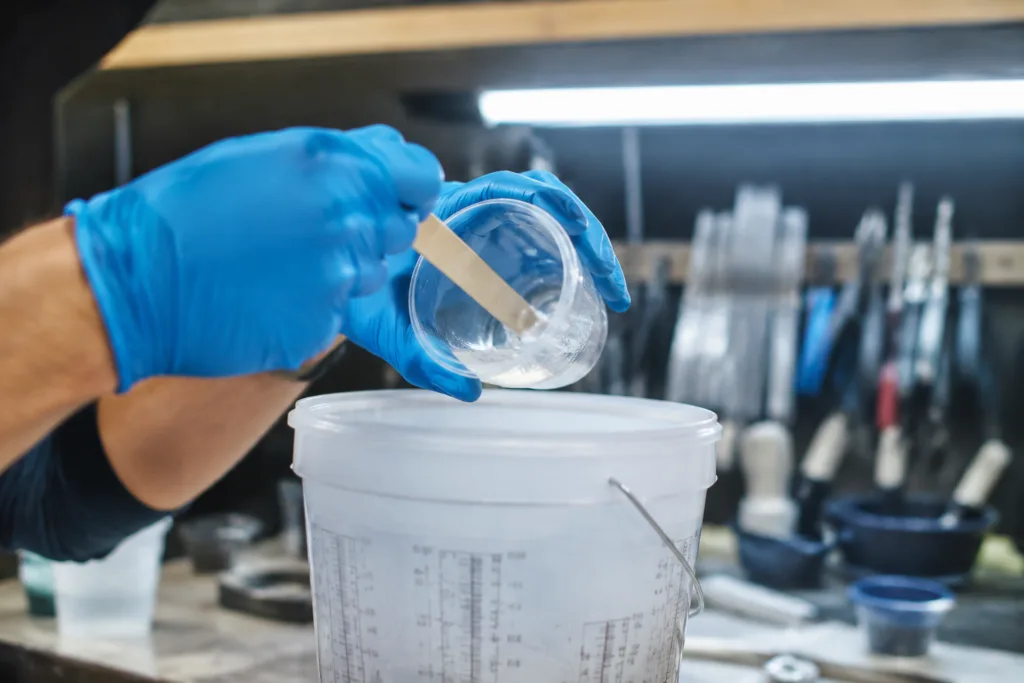
Nitrile gloves are generally superior to latex or vinyl for epoxy use. They protect from chemical exposure and reduce the risk of developing skin sensitization. Always change gloves if resin or hardener spills on them, and never reuse disposable gloves for another task.
Respirators: Essential for Fume and Dust Protection
Use a half-face or full-face respirator with organic vapor cartridges (marked “OV/”) for liquid resin handling. When sanding cured epoxy, swap in a particulate P100 or HEPA filter. Make sure your respirator fits snugly—facial hair can affect the seal. Avoid relying on just dust masks for chemical vapors.
Other Clothing and Eye Protection
- Wear long sleeves, pants, and chemical-resistant aprons.
- Use tightly sealed safety goggles or a face shield when pouring, mixing, or sanding.
- Waterproof boots and sleeves are crucial for high-volume tasks.
Need help finding resin systems compatible with your safety protocols? Check options in the Marine Epoxy Resin Manufacturer range for reference SDS and handling guidelines.
Ventilation in Boatyards: Crucial for Fume Safety
Unlike open-air construction, marine workspaces often involve tight cabins, hull interiors, and covered sheds. Effective ventilation isn’t optional—it directly affects everyone’s respiratory safety, especially when applying solvent-based resins or working in bulk.
Best Practices for Safe Ventilation
- Work Outdoors or With Forced Air: Whenever possible, handle and mix resin in open areas or garages with cross-ventilation.
- Use Explosion-Proof Fans: Move fumes away, especially in enclosed cabins, but only with spark-free equipment.
- Avoid Recirculating Air: Shop fans can dilute fumes but don’t eliminate vapors; always exhaust air to the outside.
- Check Vent Flow Before Starting: Set up air movement and do a “smoke test” with incense to see if vapors exit the area.
Epoxy Skin Sensitization: The Growing Risk
Developing an allergy to marine epoxy can end careers and permanently limit your work options. Sensitization means your immune system reacts to even tiny exposures, with symptoms ranging from redness and itching to severe blisters and swelling. Once developed, this allergy is often lifelong.
Some are more prone than others, but risk increases with exposure and improper safety habits. Don’t gamble—prevention is the only answer:
- Use new gloves for every batch session.
- Avoid “quick touch-up” jobs with bare hands or short sleeves.
- Clean skin and clothing immediately after contact.
Understanding SDS: Your Safety Roadmap
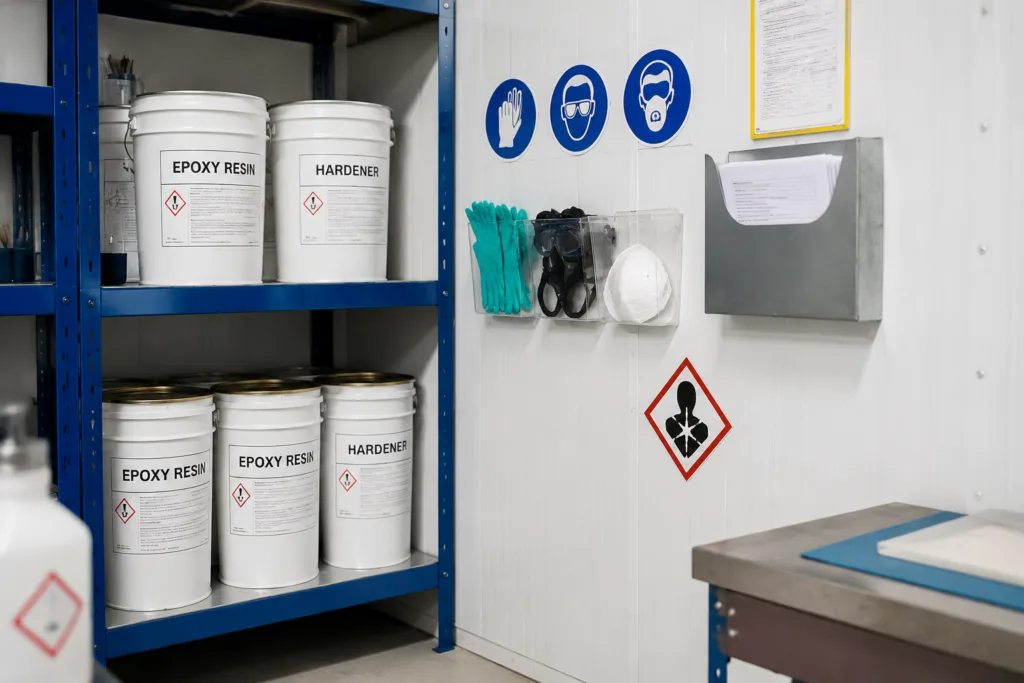
A Safety Data Sheet (SDS) should be available for every marine epoxy resin and hardener in your shop. SDS documents provide step-by-step guidance on PPE, ventilation, spill response, environmental risks, fire response, and what to do in case of exposure. It’s a legal requirement for suppliers to provide SDS (and TDS) upon request.
ZDSpoxy product lines, for example, offer downloadable SDS/TDS on their site and recommend reviewing them before each new resin or catalyst is opened. Never rely solely on experience—chemistries change between brands and lots.
Safe Mixing of Marine Epoxy: Shop Do’s and Don’ts
Most accidental exposures occur during mixing. Follow these safe routines every session:
- Pre-stage tools, PPE, and clean-up supplies. Don’t scramble mid-mix—planning saves skin and time.
- Mix in a tray, not the supply container. Large batches can overheat (“exotherm”) and spill, increasing risk.
- Never use hands or uncoated wood sticks to mix. Use disposable plastic or metal only.
- Clean up immediately after mixing. Hardened resin is safer, but don’t let drips solidify where they aren’t wanted.
Interested in rapid or specialty marine applications? See how ZDS-2060AB supports low-odor, eco-conscious rot repair projects with practical safety tips in its SDS.
Spill Response and Emergency Preparedness
Spills are common, especially while pouring into awkward hull corners and transoms. Immediate and calm action prevents injuries and property damage:
- Keep absorbent pads and solvent-free wipes in every mixing area.
- Wear gloves when cleaning, and dispose of used material according to local laws.
- Avoid solvents unless instructed by the SDS; water and soap are usually safer for skin, and dry sand/kitty litter work for the ground.
- Display emergency contacts (poison control, marina management) and location of first aid.
Shop Setup: Organizing for Ongoing Epoxy Safety
Whether you’re running a professional marine repair facility or a part-time boat shop, how you set up your space shapes safety outcomes every day.
- Separate “clean” and “resin” zones to keep food and drinks away from epoxies.
- Mount SDS binders or post digital access points at every station.
- Build ventilated mixing tables using external exhaust fans.
- Mark all chemical containers with their contents and hazards—even for transfer buckets.
- Set up PPE stations at every entry point; inspect supplies weekly.
Handling Cured vs. Uncured Epoxy
Cured marine epoxy (after proper ratio and full reaction) is generally inert and far less hazardous. However, partial or incorrectly mixed resin may outgas, remain tacky, or retain chemical hazards. Always let waste and offcuts cure fully before disposal, and wear gloves when handling ‘green’ or uncured epoxy at any stage.
Disposal and Environmental Safety in Marinas
Responsible disposal protects both people and water. Never pour excess resin or hardener into drains, sinks, or ground. Instead:
- Allow leftover mixes to cure fully in a safe, well-ventilated zone.
- Dispose as solid waste according to marina or municipal rules.
- Return empty containers for hazardous waste collection when available.
Improper chemical handling not only risks health but can impact local water quality. For detail on environmental impact and best practices, see topics in Epoxy Delamination Causes: 7 Proven Ways to Avoid Boat Repair Failure.
Safe Storage and Labeling: Shop Protocols That Matter
Store marine epoxies in cool, dry, and well-ventilated rooms away from heat and direct sunlight. Label every container with product name, batch, and hazard warnings—even for partial mixes. Segregate oxidizers, acids, or other reactive chemicals so you avoid cross-contamination risks. ZDSpoxy’s QC team recommends periodic checks for leaking or bulging containers in bulk storage setups. Always keep a spill kit close by—preparation is more effective than cleanup regret.
Worksite Practices to Minimize Health Hazards
- Rotate staff doing high-volume tasks—don’t let one person mix/dose all day.
- Keep a written log of all incidents, near-misses, and equipment failures.
- Post visible PPE and first aid instructions at every work zone entrance/exit.
- Regularly test ventilation fans and backup power where available.
Training and Communication: Making Safety Routine
Hold quarterly refreshers on PPE use, spill response, and safe handling—especially for seasonal or part-time marina staff. Assign a safety lead for each shift or facility who ensures gear and SDS access are always available. Good habits are built by routine practice, not just paperwork.
Epoxy Resin Safety; PPE, Gloves, Respirator, Ventilation, Sensitization, SDS, Safe Mixing
Marine epoxy resin safety is non-negotiable—from the first shop setup to the last brushstroke inside a hull. The right PPE, proven ventilation, proper labeling, and routine access to SDS and training prevent incidents and keep careers long and healthy. Sensitization is a life-changing risk; treat every job as a priority, not a quick fix. Build habits before you need them, and review the SDS for every new material—even familiar brands update their formulas. Whether you’re working with high-strength bonding resins, rapid primers like ZDS-2060AB, or general flooring products, safety professionalism protects your team, your business, and the spaces we sail.
Conclusion: Setting a Culture of Safety on the Water
Marine epoxy safety is much more than checking a box on PPE—it’s about understanding how each step, from mixing to disposal, protects lives and livelihoods. In busy marinas and boatyards, hazards can compound in unexpected ways. But with the right safety practices, routine review of SDS, committed training, and awareness of exposure risks, epoxy jobs deliver both performance and peace of mind. Make these practices part of your team’s standard workflow, and you’ll set a safety culture as strong as the resin itself.
Frequently Asked Questions
What PPE do I need for marine epoxy resin?
Essential PPE includes nitrile gloves, a respirator with organic vapor cartridges, long sleeves, safety goggles, and enclosed footwear. Add a chemical-resistant apron and HEPA respirator filter when sanding cured epoxy or working with high volumes.
How do I avoid epoxy skin sensitization?
Always wear gloves, never handle uncured resin directly, and change PPE if it gets soiled. Clean skin thoroughly after work, and follow proper mixing and shop clean-up routines to reduce repeated or accidental exposures.
Are dust masks enough when working with epoxy resin?
No. Use a half- or full-face respirator with certified organic vapor cartridges for wet resin, and P100 or HEPA filters for sanding jobs. Dust masks do not protect against vapors or fine particulates generated during epoxy applications.
How should marine epoxies be stored in a boatyard?
Store all unopened and partially used containers in a well-ventilated, cool, and dry area away from sunlight and incompatible chemicals. Keep lids tightly closed, label batch and hazard warnings clearly, and place a spill kit nearby for emergencies.
Where can I find Safety Data Sheets for marine epoxy products?
Request SDS from your supplier for every specific resin and hardener used. Manufacturers like ZDSpoxy provide downloadable SDS and TDS on their product and resource pages. Always review these before use and keep them available in every shop zone.
Is cured marine epoxy still hazardous?
Fully cured epoxy is generally much less hazardous, but uncured residues or poorly mixed sections can remain reactive. Always handle all waste with care and wear PPE when working near green or incompletely cured epoxy layers.
Related Reading
- Detecting & Removing Surface Contamination: Pro Tips for a Smooth Marine Finish
- How to Test Adhesion Before Marine Coating Projects
- 10 Strategies for Safe Coating in Extreme Temperatures
- 7-Step Emergency Grouting Plan for Critical Marine Equipment
- Top Solutions for Amine Blush in Marine Epoxy Applications