
Introduction: Grasping the Impact of Epoxy Fish Eyes
Epoxy flooring offers a seamless, durable finish for commercial and industrial spaces. Yet, one of the most challenging defects that contractors and facility managers face is the unexpected appearance of epoxy fish eyes. These small, crater-like circles disrupt the uniform surface and compromise both appearance and performance. Understanding why fish eyes form—especially the role of surface contamination from oils and silicones—is vital. In this article, we’ll uncover the chemistry behind fish eyes, explore the influence of surface tension, and arm you with proven strategies for diagnosing, preventing, and quickly remediating these defects on-site.
The Science of Surface Tension in Epoxy Coatings
Fish eye formation is fundamentally tied to surface tension—the invisible force that governs how epoxy spreads and interacts with substrates. In a well-prepared application, surface tension holds the coating together, resulting in a smooth, uniform layer. Even minor contamination by oil, silicone, or dust lowers the substrate’s surface energy in tiny spots. Here, surface tension pulls epoxy away, forming the characteristic circular craters known as fish eyes. The more pronounced the surface tension difference, the larger or deeper the fish eye.
Chemical Interactions: How Contaminants Cause Fish Eyes
When contaminants with low surface energy—like silicone oil or mineral oil—are present on the substrate, they repel the high-energy epoxy resin. Epoxy naturally tries to minimize its contact with these substances. This chemical aversion forms sharply-defined edges, causing the well-recognized fish eye. The greater the chemical mismatch between epoxy and the contaminant, the worse the effect. Understanding this basic interaction helps target interventions in both surface preparation and troubleshooting.
Fish Eyes vs Other Epoxy Defects: Key Visual Differences
| Defect Type | Appearance | Likely Cause | Main Solution |
|---|---|---|---|
| Fish eyes | Tiny, round craters with ringed edges | Oil or silicone contamination | Thorough cleaning & surface testing |
| Bubbles | Raised clear or white domes | Entrapped air or off-gassing | Slow mixing, heat management |
| Pinhole/porosity | Micro or tiny holes, not always circular | Moisture, dust, or poor mixing | Substrate moisture control |
| Amine blush | Cloudy, greasy layer | Humid curing conditions | Water and detergent cleaning |
Epoxy Fish Eyes: A Closer Examination
Epoxy fish eyes are small craters with a raised, well-defined edge. They are not simply surface imperfections—they result from complex interactions at the microscopic level. Even a drop of oil from a contractor’s glove or residual silicone spray from adjacent work can trigger these defects, highlighting the importance of vigilance throughout every stage of flooring installation.
Common Surface Contaminants Leading to Fish Eyes
- Cutting oils and lubricants used during concrete preparation
- Grease from equipment or hand tools
- Residual cleaning agents, especially those containing silicone oil
- Vehicle tire marks or hydraulic oil leaks
- Transfer from skin contact, sweat, or skin oil
Contaminants can originate from equipment, maintenance practices, or even environmental exposure. Proper site housekeeping is a cornerstone for quality epoxy flooring systems.
How Silicone Oil Residue Triggers Major Problems
Silicone-based products are notorious for causing epoxy fish eyes because they have extremely low surface energy. Just a thin, invisible film of silicone can repel wet epoxy resin. Products like release agents, some tire treatments, or lubricants may seem harmless, but their presence is enough to trigger widespread defects. Testing and confirming the removal of such residues is a non-negotiable step in contamination-prone environments.
The Role of Substrate Preparation in Preventing Fish Eyes
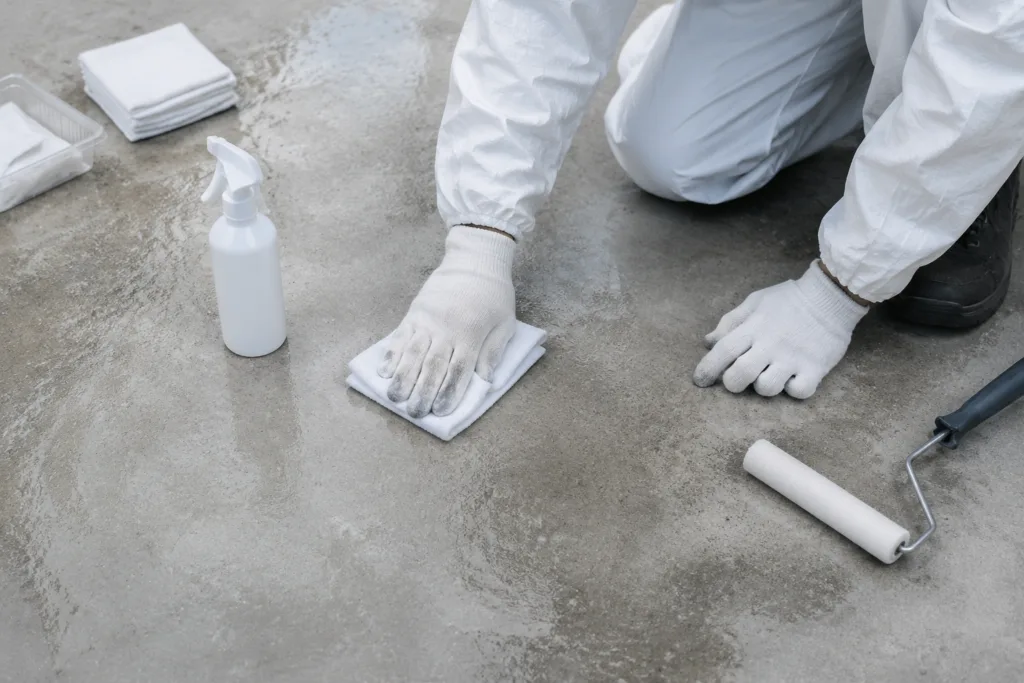
Proper floor preparation is your strongest defense against fish eyes. Grinding, shot-blasting, and aggressive cleaning remove the bulk of contaminants. Finishing passes must include vacuuming and, often, solvent wiping with approved agents. Always use clean, lint-free cloths and change them frequently to avoid redistributing oil or silicone across the surface.
Best Practice: Cleaning and Decontamination Methods
- Multiple solvent wipes (acetone, xylene)
- Water and non-residue detergent scrub for amine blush or salts
- Clean rags and good ventilation to accelerate dry-down
- Use of UV light or blacklight to reveal oil contamination on concrete
- One final pass with the “white rag test”—if the cloth picks up any color or shine, more cleaning is needed
Checking for Residual Contamination: Key Tests
- Water break test: Mist clean water on the surface. If the water beads, contamination is present; if it sheets evenly, the surface is likely clean.
- Adhesive tape test: Stick and remove a strip of tape. If oil/grease stains the tape, further cleaning is needed.
Be systematic—rushing these simple tests leads to costly, time-consuming repairs if defects arise later.
Epoxy Formulation and Product Selection: Dealing With Challenging Surfaces
Low-viscosity, wetting-optimized primers can sometimes overcome minor contamination. Consult application documents for advanced primer systems such as ZDS-1012ab and ensure your priming approach matches the substrate conditions. Some specialty primers offer improved tolerance to oil-stained concrete, but even these demand careful prep.
Temperature, Humidity, and Environmental Effects
Ambient conditions greatly influence epoxy’s flow and curing. Low temperatures increase viscosity, making it harder for the resin to flow into small pores and wet out the surface, sometimes “bridging” over contamination. High humidity can create condensation, essentially a hidden contaminant layer. Always monitor for dew point, substrate temperature, and moisture before application to minimize surprises.
Mixing and Application: Preventing Secondary Contamination
Even perfectly cleaned floors can fall victim to on-site mishaps. Always mix and pour resin in clean, designated areas. Use dedicated, residue-free tools—never one that has previously contacted grease, oil, or silicones. Prevent bare-hand contact and ensure work areas are isolated from adjacent trades using lubricants, release sprays, or cutting fluids.
Emergency On-Site Remedies for Fish Eyes
- Spot patching minor fish eyes with additional mixed resin using a small brush
- Allowing the first coat to cure, decontaminating the surface, and applying a second flood coat
- For severe cases, abrading the affected area, conducting full decontamination, and recoating
- Ensure removal of loose edges; feather out repairs for seamless results
ZDSpoxy Real-World Insight: Quality Control in Fish Eye Prevention
From a ZDSpoxy manufacturing perspective, robust quality control upstream is fundamental: controlling resin viscosity, ensuring correct mixing ratios, and checking for contamination in every batch. On site, site supervisors stress scheduled cleaning before and after trades, batch size discipline, and thorough documentation of procedures. This approach ensures consistency—from production plant to project installation—minimizing the risk of avoidable fish eye defects.

Epoxy Fish Eyes in Different Flooring Systems
Fish eye susceptibility can differ depending on the floor system. High-gloss decorative coatings are especially vulnerable, where even small craters stand out. Industrial, chemical-resistant or antimicrobial flooring (such as antimicrobial resin flooring) incorporates advanced resin technologies, but still depends on good site prep and oil management to avoid defects. Multiple layers in decorative or ESD flooring make early intervention critical, or else defects propagate through to the final finish.
Epoxy and Polyurethane: Does Chemistry Change the Fish Eye Risk?
While polyurethane and polyaspartic topcoats often claim better tolerance to surface issues, they are just as vulnerable to oil and silicone contamination. It’s a common misconception that switching chemical systems “solves” fish eye problems. Both require pristine, high-energy surfaces for proper bonding.
Specifying the Right Primer: A Real-World Example
When faced with contamination-prone concrete, a high-penetration primer such as ZDS-1011ab can help ensure robust adhesion and uniform surface wetting. However, even the best primer cannot compensate for unaddressed grease or silicone—so always combine product selection with diligent cleaning and thorough inspection.
Troubleshooting: Diagnosing Fish Eyes After Application
- Examine defect shape: Fish eyes have distinct raised edges, and may recur in specific areas (typically associated with machinery or maintenance areas)
- Check for pattern: Are fish eyes clustered near doorways, drains, or expansion joints? This can help pinpoint the contamination source
- If multiple layers are affected, test each layer separately to identify where defect originated
Long-Term Consequences of Ignoring Fish Eye Defects
Overlooking fish eyes isn’t just a cosmetic issue. These craters can trap moisture and chemicals—eventually leading to further blistering, delamination, or microbial growth beneath the coating. Facilities with strict hygiene or ESD requirements face operational and compliance risks if surface defects persist.
Case Study: Emergency Repair vs Permanent Fix
| Approach | Method | When to Use | Downside |
|---|---|---|---|
| Emergency repair | Spot patch with new resin | Small, localized fish eyes; time critical | May show slight texture mismatch |
| Permanent fix | Abrade, deep clean, full recoat | High-traffic or visible areas | Extended downtime, higher cost |
Proactive Site Management Strategies
- Segregate zones: Prevent greasy trades or maintenance in application zones post-surface prep
- Document all cleaning steps and keep logs for inspection
- Fresh gloves and disposable boot covers at all times
- Test and sign off areas before moving to coating application
Training Crews on Fish Eye Prevention
Effective contractor and applicator training focuses on surface energy principles, recognition of contamination, and hands-on cleaning techniques. Encourage a questioning attitude—if in doubt, retest and reclean. Detailed handover briefings with the previous trades can reveal hidden contamination sources overlooked in standard walkthroughs.
When to Stop and Start Again: Recognizing Limits
If fish eyes reappear after several attempts, it’s a clear sign deeper contamination or slab issues exist. At this point, pause work, consult with both the flooring manufacturer and a specialized contamination removal contractor, and conduct in-depth substrate testing before investing further time or material.
Epoxy Fish Eyes: Key Takeaways and Action Steps

- Fish eyes are a visible warning sign of chemical incompatibility or contamination
- Surface energy, cleaning, and substrate preparation are as critical as product selection
- Emergency repairs are possible but genuine long-term floor performance depends on proactive quality control and site management
- Never underestimate the role of training and documentation—success is rarely accidental
Frequently Asked Questions
What causes fish eyes in epoxy floor coating?
Fish eyes typically result from surface contamination—especially oil, grease, or silicone residues—that lower the surface energy in spots, making epoxy pull away and form craters.
How do I check if the floor is clean enough before epoxy application?
Use the water break test: mist water on the surface. If the water sheets evenly, it’s likely clean; if it beads, contamination remains.
Can I fix fish eyes after the epoxy has cured?
Yes, minor fish eyes can be patched with more resin or recoated after cleaning and abrasive prep. Severe cases may require deep cleaning and a new primer or base coat.
Is silicone oil the most common contaminant?
Silicone oil is one of the most problematic because of its low surface energy, but mechanical oil, grease, and some cleaning products are also common culprits.
Will switching to polyurethane or polyaspartic solve my fish eye problem?
No, both systems are sensitive to surface contamination and require equally diligent preparation to avoid fish eyes.
Are there primers that help prevent fish eyes?
Some specialty primers, like oil-tolerant or wetting-optimized formulas, can help, but they are not a substitute for thorough decontamination and surface preparation.
Related Reading
- Boat and Marine Epoxy: The Ultimate Guide to Diagnosing Fish Eyes and Craters
- Industrial Secrets to Eliminating Oil-Soaked Concrete Problems in Floor Repairs
- Your Action Plan for Tacky Epoxy: Diagnosing and Solving Sticky Surfaces
- Top Solutions to Bubbles and Pinholes: How to Achieve Pristine Epoxy Laminations
- Epoxy Delamination Revealed: 7 Reliable Ways to Prevent Costly Boat Repairs